

- The History and Origins of Thrift Stores
- The History and Origins of Vintage
- Thrift Stores vs Vintage
- Annual European Event
Thrifting and vintage are increasingly popular terms and lifestyles that appeal to more and more people. Appreciated for various reasons, whether economic, aesthetic, or environmentally responsible, shopping at thrift stores or for vintage items is gaining momentum.
Rising in popularity due to their commitment to sustainability, high ethical standards, and accessibility through online sales, thrift stores and vintage shopping are becoming increasingly attractive options for environmentally and style-conscious consumers.
Thrift stores, for those looking to purchase second-hand clothing, offer a variety of items ranging from vintage clothing to high-end designer pieces, and have become an integral component of the fashion industry.
This article idea was not only inspired by videos from the Belgian YouTuber @yourbabyBarbra, in which she interviews people in Brussels, Belgium, asking them about their favorite thrift store, but also by the largest vintage event in Europe, which will make its appearance, as it does every year, in Brussels next week!
Before delving further into this annual event, let’s first explore these two concepts, thrift stores and vintage, which are both similar and different.
The History and Origins of Thrift Stores
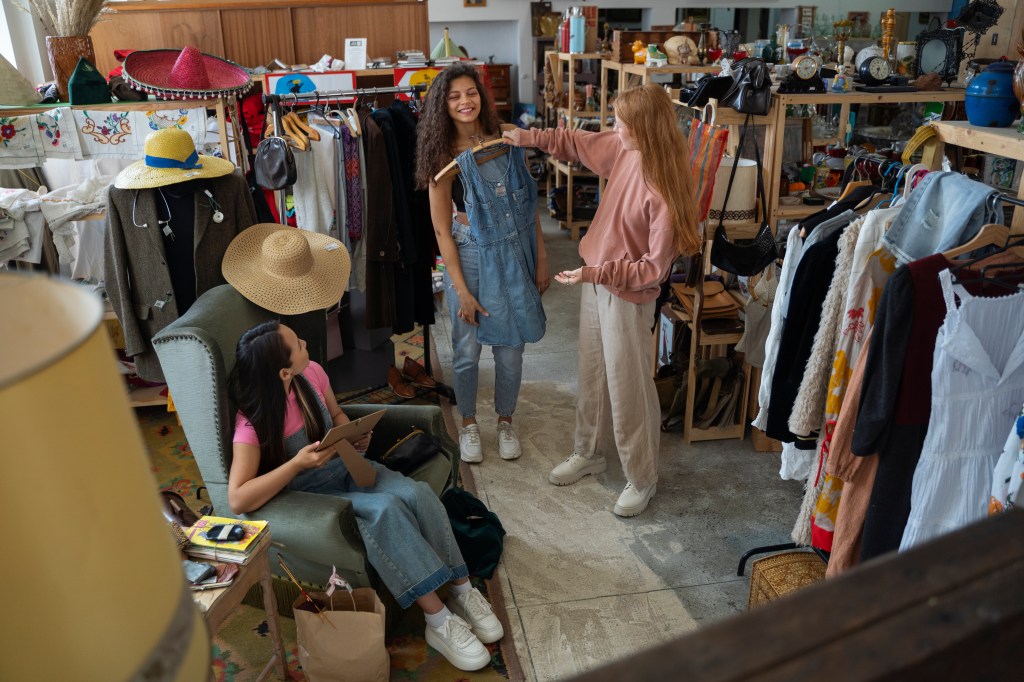
The history and origins of thrift stores date back several centuries and vary across different regions of the world.
Second-hand clothing has always been a reality. People often sold, traded, or donated their old clothes when they no longer needed them. In many cultures, clothes were passed down from one generation to another or reused within communal contexts.
In Europe, during the Middle Ages, second-hand clothes were often sold at local markets and fairs. People bought and sold used clothing, textiles, and other second-hand items.
Modern thrift stores, as we know them today, emerged in the late 19th and early 20th centuries, particularly in large industrialized cities. The rise of mass production and increased consumption led to a greater quantity of clothing available for resale and reuse. Consequently, during the 20th century, thrift stores multiplied in many regions of the world, offering an affordable alternative to buying new clothes. Clothes became popular among low-income individuals, students, and those seeking unique or vintage items.
Over time, thrift stores have gained popularity due to their offering of unique, affordable clothing, often of better quality than cheap mass-produced garments. Thrift stores have also been perceived as a more sustainable and environmentally friendly option, as they help reduce the amount of clothing sent to landfills.
The History and Origins of Vintage

The origin of the term “vintage” dates back to the 15th century, where it was used to describe the grape harvest for winemaking, and by extension, to denote a superior harvest. The word “vintage” derives from the French word “vendange,” which means grape harvest.
Over time, the term “vintage” has been extended to other areas to signify something classic, excellent, or exceptionally good in its kind. For example, in the 19th century, the term began to be used to describe exceptional wines, and in the field of fashion, it was used to refer to high-quality clothing or accessories from a previous era.
The history of vintage is a fascinating exploration of how styles, trends, and objects from the past have been rediscovered and reinterpreted over the ages.
The concept of vintage, as we know it today, has its roots in the early 20th century, when some individuals began collecting old objects and clothing for their aesthetic, historical, or sentimental value. This practice was often associated with antique collectors and fashion enthusiasts interested in past styles.
In recent decades, the interest in vintage has significantly increased, fueled by a combination of factors such as the rise of the internet and social media, the growing popularity of sustainable development and ethical fashion, as well as nostalgia for past decades.
Today, vintage has become a full-fledged cultural phenomenon, with people of all ages seeking vintage clothing, furniture, accessories, and decor for their unique character, quality, and history. More than just a trend, it is a way of life for many, reflecting an interest in authenticity, sustainability, and creativity in an increasingly mass-consumer-oriented world.
Thrift Stores vs Vintage
Although the terms “vintage” and “thrift store” are often used interchangeably, they refer to different things in the fashion and commerce realm.
As mentioned earlier, the origin of vintage as a concept is deeply tied to quality, authenticity, and an appreciation for the past. Over time, this notion has expanded to encompass a variety of objects and styles that embody these characteristics, becoming a term commonly associated with fashion, design, art, and popular culture.
To qualify as “vintage,” items are typically at least 20 to 30 years old and have aesthetic or historical value. Vintage clothing, accessories, furniture, and other items are often sought after for their unique character, retro style, and superior quality. Vintage items can be found in specialized stores, vintage markets, online boutiques, and even thrift stores.
On the other hand, a thrift store is a shop or market that sells second-hand clothing, regardless of age. Items sold in a thrift store can span different eras, from recent to vintage. Thrift stores often offer a diverse selection of clothing, shoes, and accessories at affordable prices. They may also include new items or surplus stock.
Thus, while thrift stores may sell vintage items, not all items sold in a thrift store are necessarily vintage. In contrast, vintage stores or markets primarily focus on selling specifically selected vintage items for their retro character and historical or aesthetic value.
And what about retro, is it the same as vintage?
“Retro” and “vintage” are also often used interchangeably but carry different nuances.
“Retro” typically refers to items that are made or designed in a style reminiscent of a previous period but produced in a more recent time. For example, a retro dress might be designed and manufactured today but mimics the style of the 1950s.
So, while “vintage” specifically refers to authentic items from the past, “retro” can refer to new items designed to resemble a previous era.
Annual European Event
Vinokilo – Vintage by the Kilogram
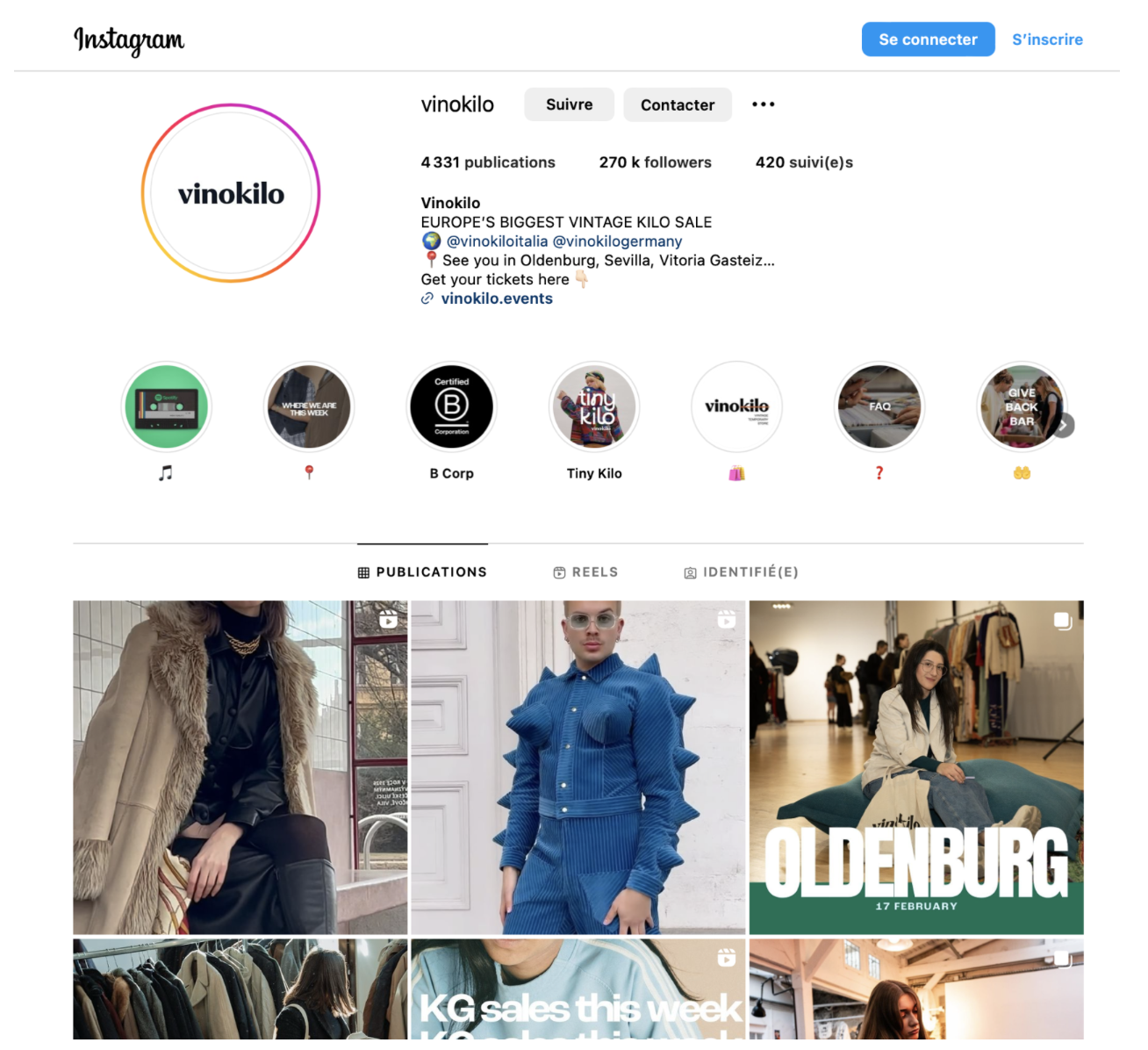
Every year, in several countries across Europe, Vinokilo organizes a Vintage by the Kilogram sale. Tickets are free but limited. There is an option to pay €5 for Early Bird tickets (first hour only). The pricing of items is based on weight.
At this event, attendees discover vintage items from all over Europe with a wide selection, ranging from vintage dresses, floral or plain, to printed garments from the 70s, 80s, and 90s. There are also coats, trench coats, leather jackets, Levi’s and Wrangler shirts, and much more!

So, I live in Belgium, and the dates for Brussels are as follows:
- February 23, 2024, from 12 p.m. to 8 p.m.
- February 24, 2024, from 9 a.m. to 5 p.m.
Where? Rue Dieudonné Lefèvre 4, Brussels – Belgium
For more information and to reserve your ticket in Brussels, click here!
To check availability in other European cities, click here!
I attended the event last year, and the atmosphere was quite pleasant, with music mixed by a DJ and a friendly welcome. There was indeed a wide and varied selection to suit all tastes. I fell in love with an oversized Levi’s denim jacket, but the condition of the jacket left me skeptical. Overall, the items were in very good condition, but this Levi’s jacket didn’t seem to have been well preserved, in my opinion. There were also many beautiful shirts, but unfortunately, they were no longer available in my size, or not at all.
So, I went without really knowing what I was looking for, and especially without a shopping plan. In the end, I left empty-handed, but for vintage enthusiasts, I highly recommend checking it out!
More thrift store addresses will be posted in an upcoming article! Stay tuned for some great finds, so… ready for some shopping?
See you soon! Beautifully Moi!
 Beautifully Moi
[…] English version here […]
LikeLike