

In my previous articles, I reviewed the SVR Blur Sun Secure SPF 50+, a popular sunscreen on social media and also covered everything you need to know about UV, SPF, and sun protection.
As summer is in full swing and we spend more time outdoors, it’s essential to understand the different sunscreens available on the market, especially since it’s something we should use every day, not just on sunny outings.
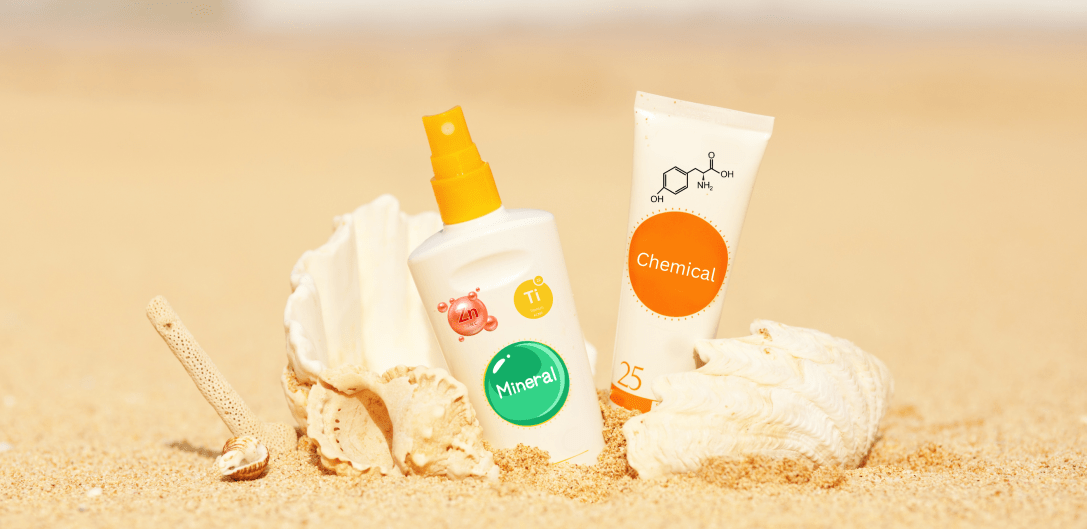
To round out my series on sun protection, let’s delve into the differences between mineral and chemical sunscreens.
Mineral Sunscreen
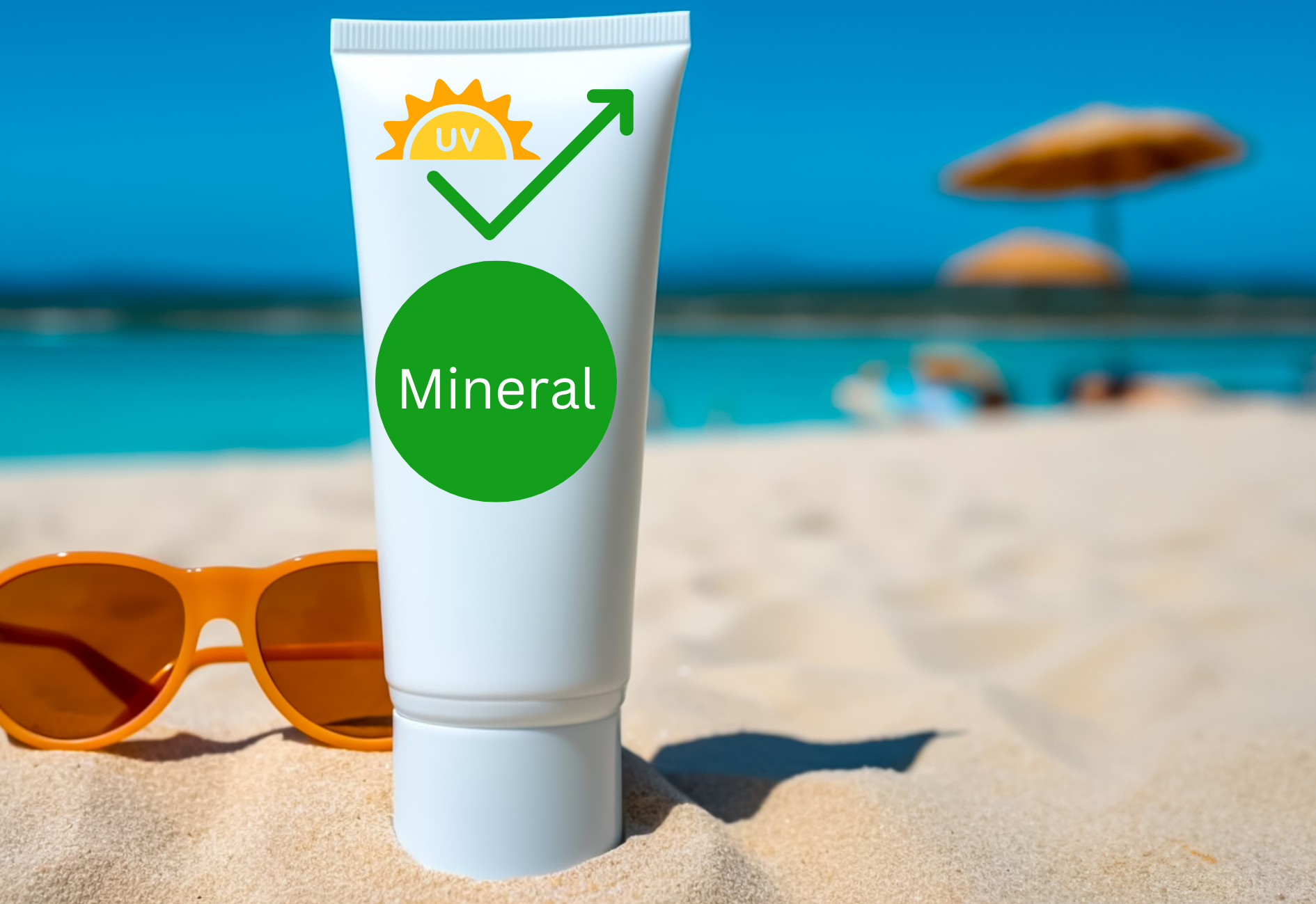
Mineral sunscreens contain active ingredients like zinc oxide (1) and titanium dioxide (2). These minerals sit on the surface of the skin and physically block UV rays.
Mineral sunscreens act as a physical barrier that reflects and scatters UV radiation away from the skin. They provide protection immediately upon application.
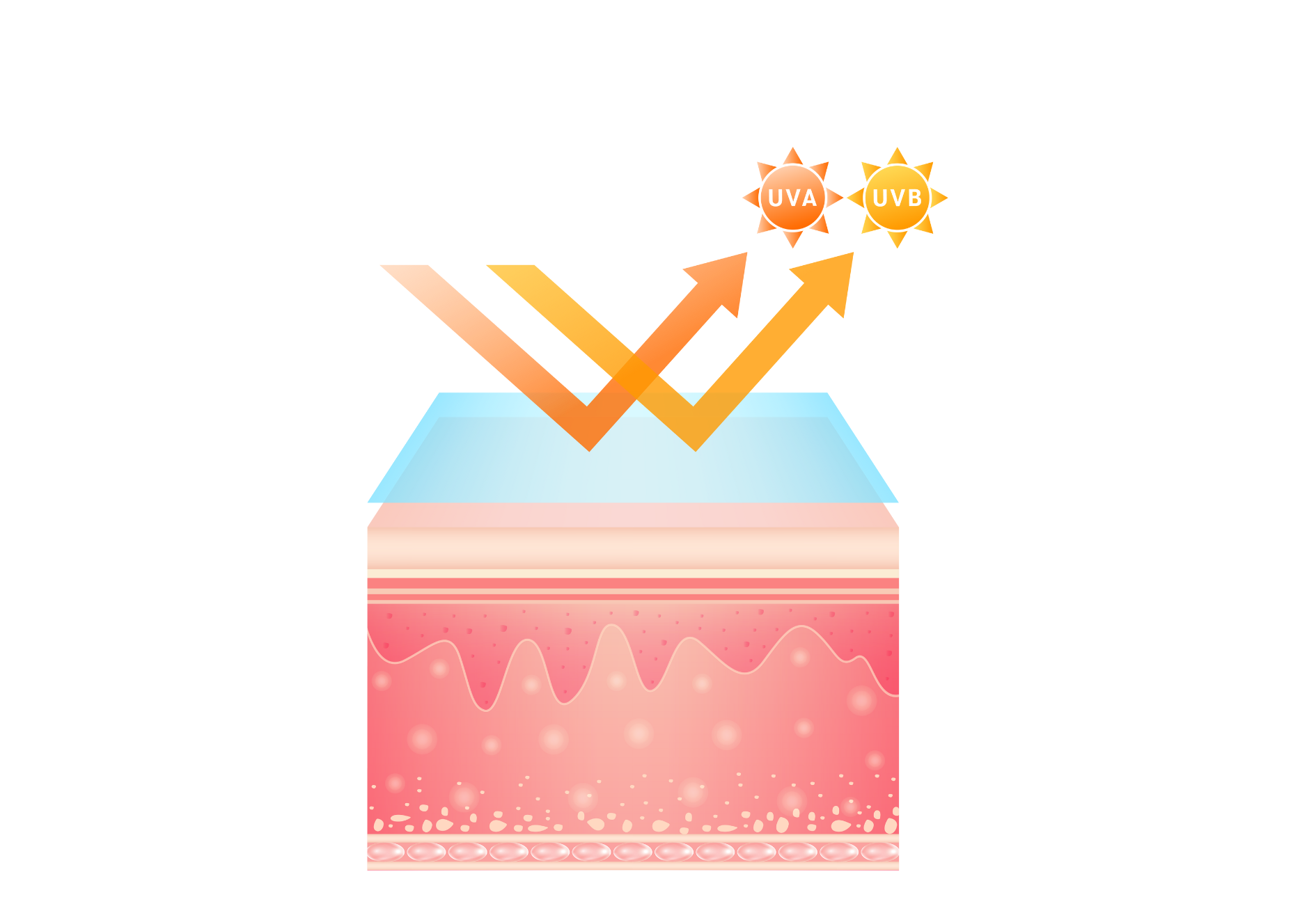
(1) Zinc Oxide: Forms a physical barrier on the skin that reflects and scatters UV rays, providing broad-spectrum protection against both UVA and UVB rays.
(2) Titanium Dioxide: Also forms a physical barrier on the skin, reflecting UV rays and protecting against UVB and some UVA rays.
Pros:
- Immediate Protection: No need to wait after application.
- Gentle on Skin: Often recommended for sensitive skin and for children.
- Broad-Spectrum Protection: Effectively blocks both UVA and UVB rays.
Cons:
- Appearance: Can leave a white cast on the skin, especially noticeable on darker skin tones.
- Texture: May feel thicker and harder to spread compared to chemical sunscreens.
Chemical Sunscreen
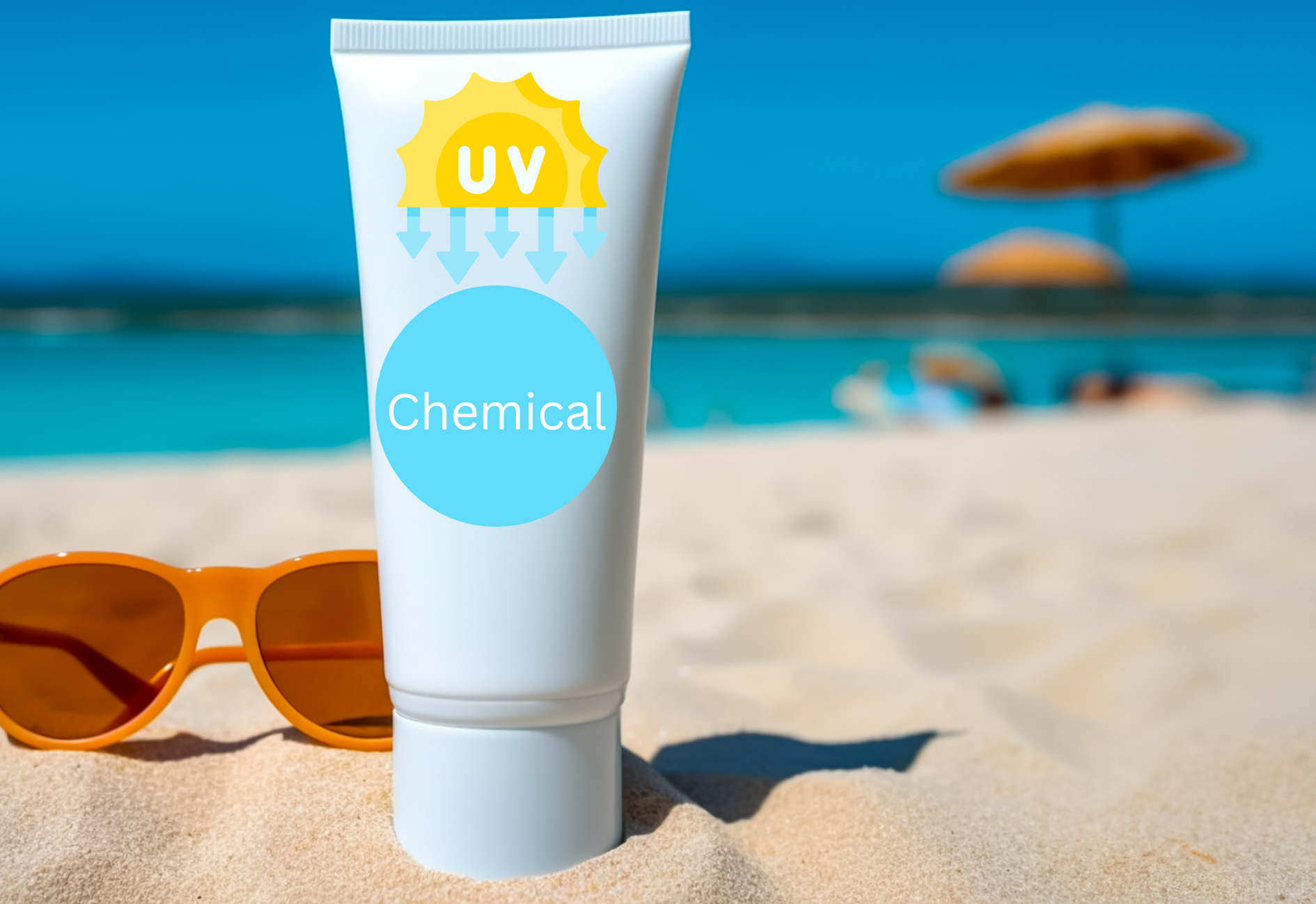
Chemical sunscreens contain organic (carbon-based) compounds like oxybenzone (1), avobenzone (2), octisalate (3), octocrylene (4), homosalate (5), and octinoxate (6).
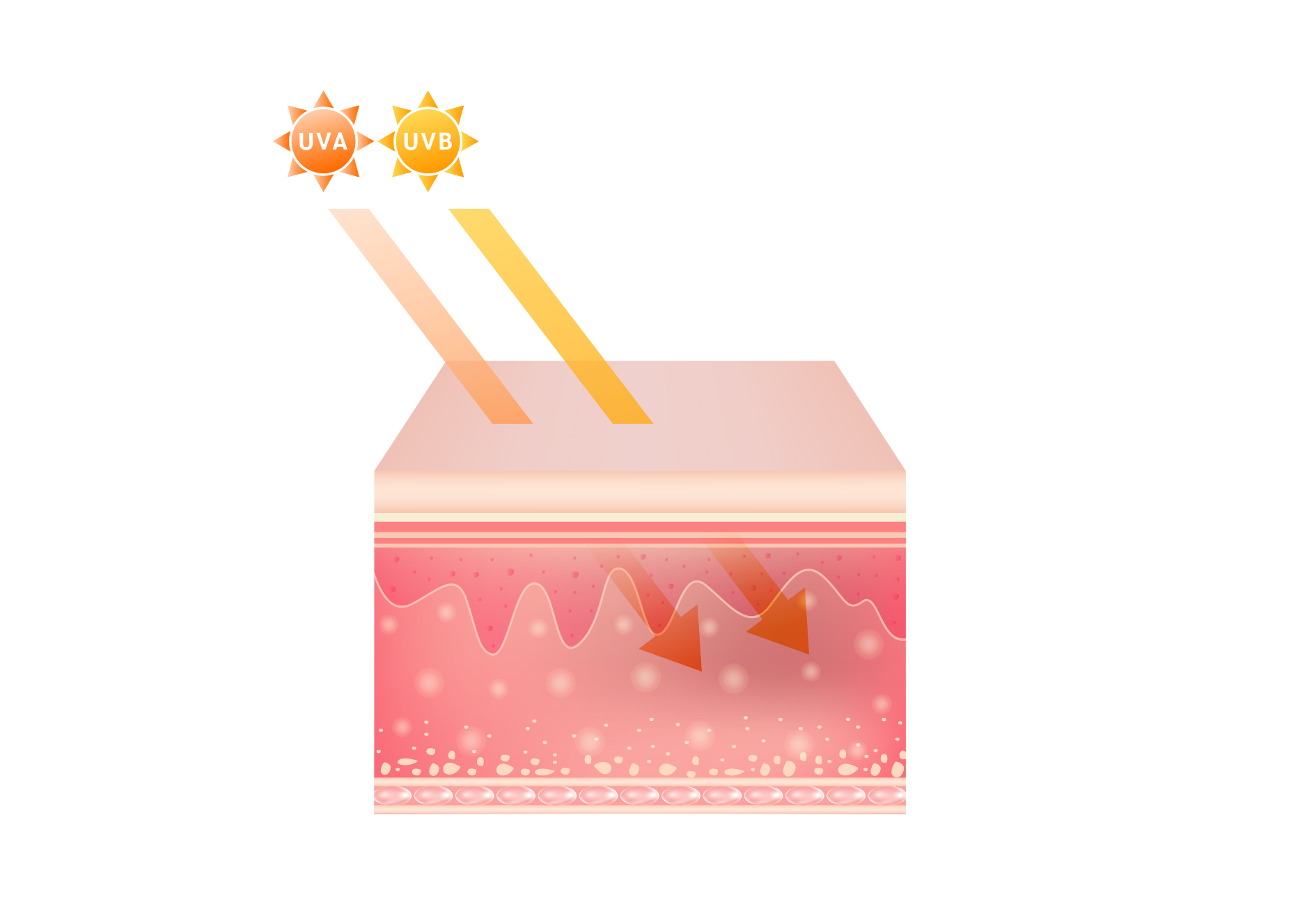
Chemical sunscreens absorb UV radiation and convert it into heat, which is then released from the skin. They usually need to be applied 15-30 minutes before sun exposure to be effective.
(1) Oxybenzone: Absorbs UV rays and can be irritating for some people.
(2) Avobenzone: Provides broad protection against UV rays, including UVA.
(3) Octisalate: Stabilizes other ingredients in sunscreens and helps absorb UVB rays.
(4) Octocrylene: Stabilizes other ingredients and absorbs UVB rays.
(5) Homosalate: Absorbs UVB rays and helps stabilize the formula.
(6) Octinoxate: Absorbs UVB rays and helps protect the skin from sunburn.
Pros:
- Cosmetic Appeal: Generally, no white cast; they blend well into the skin and are lightweight.
- Formulation Versatility: Available in various formulations like gels, creams, and sprays.
Cons:
- Potential Irritants: Some chemical ingredients can cause irritation, especially for sensitive skin.
- Environmental Concerns: Certain chemicals, like oxybenzone and octinoxate, have been linked to coral reef bleaching and may be harmful to marine life.
Making the Choice
When choosing a product, it’s important to consider various factors and criteria that are important to you. Like:
Skin Type Considerations

- Sensitive Skin: Mineral sunscreens are usually less irritating.
- Cosmetic Preferences: If you prefer a sunscreen that blends well and feels light, chemical sunscreens might be more suitable.
Environmental Impact

If you are environmentally conscious, you might prefer mineral sunscreens, especially those labeled reef-safe.
Activity Level

For activities involving a lot of sweating or water, look for water-resistant options in either category, but note that reapplication is necessary for both.
Doctors’ Choice

In an article from the Cleveland Clinic’s Health Essentials that I read, Dermatologist Taylor Bullock, MD, highlights that mineral sunscreens, which use zinc oxide and titanium dioxide, are better for sensitive skin and less likely to cause irritation or allergic reactions compared to chemical sunscreens. He emphasizes, “Both mineral and chemical sunscreens are advantageous in their own ways, but in the end, the best sunscreen for you is the sunscreen that you are willing to use.”1
Similarly, in an article from Houston Methodist’s health blog, Annie Christenson explains that mineral sunscreens use zinc oxide or titanium dioxide to reflect UV rays, providing broad-spectrum protection. These two ingredients are also recognized by the FDA as safe and effective (GRASE)*.
She points out that mineral sunscreens are safer for sensitive skin and the environment, especially marine life.
While chemical sunscreens are effective, some of their active ingredients can enter the bloodstream, though the FDA indicates more research is needed to assess long-term effects. Christenson recommends mineral sunscreens for sensitive skin, as they do not generate heat that can irritate the skin.2
*GRASE = “Generally Recognized as Safe and Effective.” The FDA uses this label for some over-the-counter products, like sunscreen ingredients. If an ingredient is GRASE, it means it’s safe and effective based on scientific evidence and doesn’t need a new drug approval to be sold.
My Personal Choice

Usually, I lean towards chemical sunscreens because I prefer a lightweight, invisible formula that blends seamlessly into my skin. I enjoy matte finishes and the convenience of a sunscreen that doesn’t disrupt my makeup.
My favorite sunscreen at the moment that meets all my criteria is the Oil Control from Eucerin. (You probably already knew this, as I mention it often on this blog.)
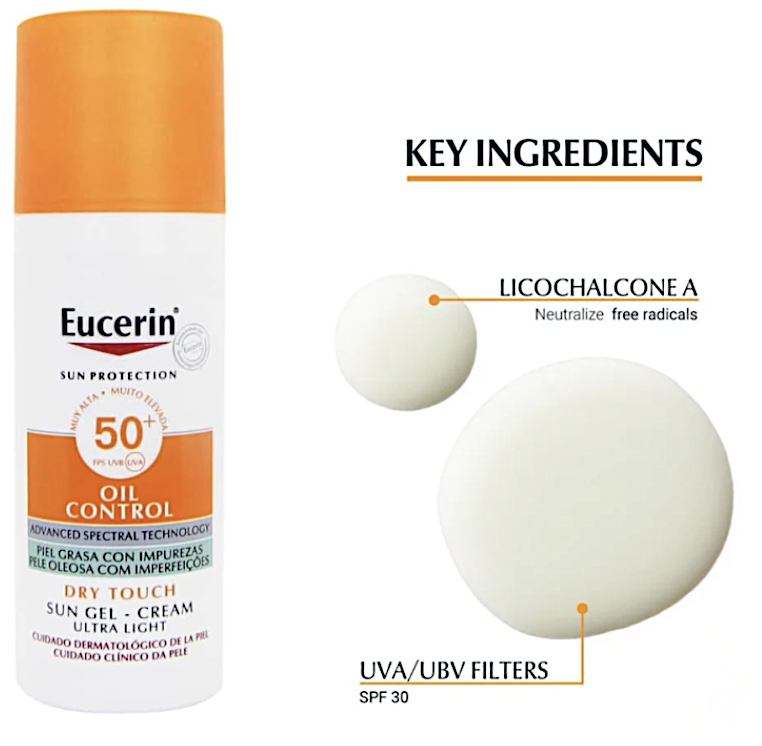
But before finding my all-time favorite from Eucerin, years ago, I also tried La Roche-Posay Anthelios UVMune 400, which was very good, but it had a bit too much of a glowy finish for my taste.
The one I didn’t like at all is the Avène Anti-Aging SPF 50+. It left a quite visible white cast on my face and was too thick for my taste, so I only used it on my neck.
I also reviewed the sunscreen I’m currently using, the one that went viral on social media, the SVR Blur Sun Secure SPF 50+. I have to say that it’s not a cream I particularly like, and I probably won’t repurchase it. You can check out that review here.
All the sunscreens mentioned above are chemical ones. However, I am considering switching to a mineral sunscreen to see if it might be better for my acne-prone and sensitive skin to use year-round.
However, I had a remarkable experience with a tinted mineral sunscreen years ago with the Bioderma Photoderm Tinted Mineral. I used the very light shade, which matched my pale skin perfectly and provided a flawless, matte finish with a powder-like effect. It was so good that I used it as a substitute for foundation, achieving the “nude skin” look as advertised on the tube. Unfortunately, it became hard to find in physical stores, and I stopped using it. But I’m thinking of searching for it again because in my head the effect was just as amazing as described.
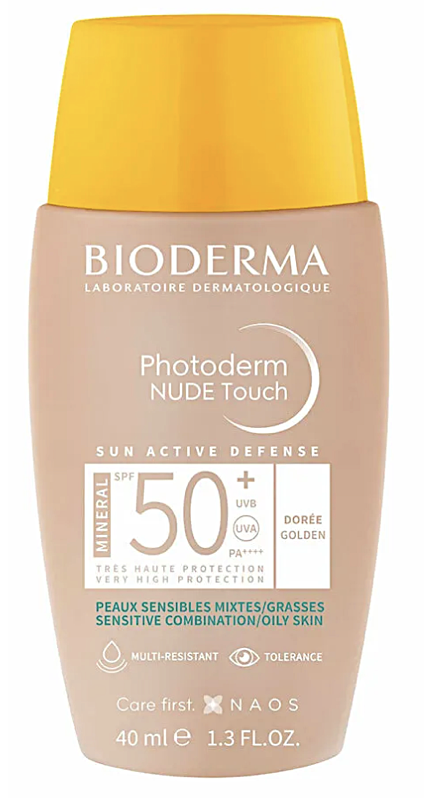
And because I love Bioderma products. I like their micellar water or again the sunscreen mentioned just above. I also want to try their untinted mineral sunscreen. I haven’t even tried a sample yet, so I don’t know if it will be shiny or thick, but I’m eager to find out.
I’m also really curious to try some Korean mineral sunscreens that have caught my eye, like the ROUND LAB-Birch Juice Moisturizing Mild Up Sunscreen and the Isntree-Hyaluronic Acid Natural Sun Cream.
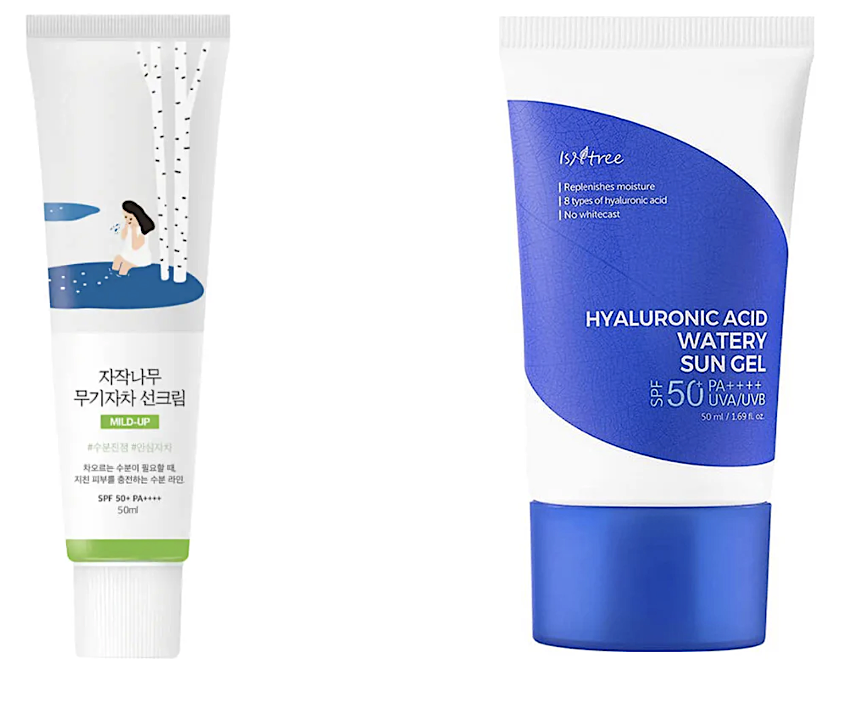
Even though I’m still using the SVR sunscreen, I’m already looking for another option. I had seen that the Isntree sunscreen was quite popular on social media, but it was actually a friend who convinced me to buy it after she tried and loved it. Unfortunately, it was out of stock in the store, probably due to its popularity on TikTok.
The salesperson then suggested the Birch Juice, which I had also seen online, and applied a bit on my hand. I was pleasantly surprised: it doesn’t leave a white cast, it’s non-greasy, and it’s not sticky. This made me want to learn more about it.
As soon as I finish my SVR sunscreen, I plan to try both of these Korean sunscreens and give you a detailed review.
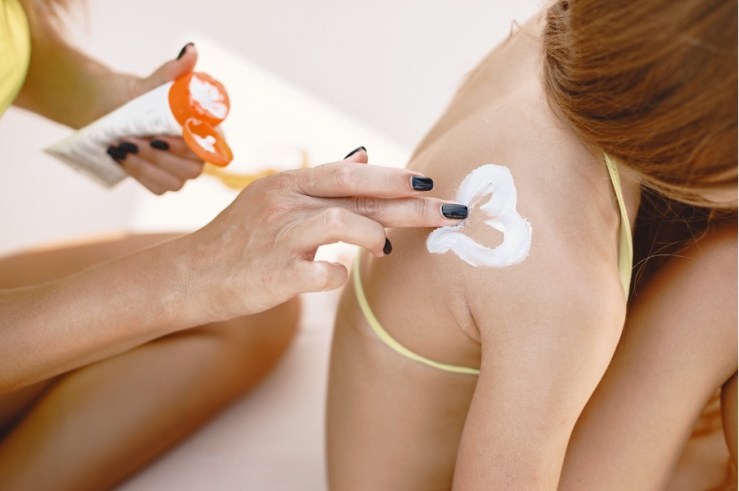
Both mineral and chemical sunscreens have their advantages and drawbacks. Your choice should depend on your skin type, preferences, and environmental considerations. Regardless of the type you choose, the most important thing is to use sunscreen regularly and generously to protect your skin from harmful UV rays.
If you’ve already tried these sunscreens (mineral or chemical), let me know what you think! It would be great to compare our opinions and provide readers with different perspectives.
It would be awesome to exchange our findings, not just to compare opinions, but also to offer readers various viewpoints.
Subscribe to my blog for more article!
See you soon, Beautifully Moi!
 Beautifully Moi
[…] English version here […]
LikeLike
[…] (if I go out). NB: Want to know more about sunscreens and SPF, check some articles -> (“Mineral vs. Chemical Sunscreen: Difference & My Preferences?“; “SPF, PA, UVs Rays, and Protection: Everything You Need to […]
LikeLike
[…] It’s also important to note that this is a chemical sunscreen, unlike the mineral sunscreens you often find in stores. If you’re wondering what this means for your skin and why this distinction matters, I encourage you to check out my article on the difference between chemical and mineral sunscreen here! […]
LikeLike
[…] To remove salt, sand, sweat, and sunscreen residue (even non-comedogenic sunscreen can oxidize and become occlusive.) (Discover the key differences between chemical and mineral sunscreens.) […]
LikeLike