
- My Current Skincare Routine: Minimal but Effective
- Where and How My Skin Purged
- Skincare Routine, Purging, and Consistency: What This Taught Me
- 5 Key Things to Remember If You’re Restarting Tretinoin or Azelaic Acid
- Final Thoughts: Stay Motivated and Trust Your Skin
Usually, I’m pretty consistent with my skincare routine. Before I started Roaccutane, I had acne-prone skin, with a bit of rosacea and quite a few blackheads. So I really needed to take care of my skin to keep it under control.
Since I finished my Roaccutane treatment, almost three years ago in August, my skin has changed a lot. I had a small breakout a few months after (you can read my testimony “Post-Isotretinoin (Accutane) Update: 1 Month, 3 Months, and 1.5 Years Later“), but since then, I mostly get small pimples now and then that disappear quickly, within a day or two. Nothing too bothersome.
Even after Roaccutane, I wanted to stay consistent with tretinoin and azelaic acid, both prescribed by my dermatologist, to maintain the results and work on improving my skin texture, especially the scars and little imperfections left behind.
But over time, I have to admit, I became less strict. My skin was doing fine, so I wasn’t as regular. Then a few months ago, I caught a bad flu (Flu and Dry Skin: When Hydration (Inside and Out) Becomes Essential), and my skincare routine became very inconsistent… some days I did it, some days I didn’t.
One day, I noticed my complexion looked dull, and my skin had lost its glow. I even had a little boost from a Garnier sheet mask (which I reviewed here), but it didn’t last. So I decided to get back to my routine properly, every single day.
And that’s when I learned something: even though my skin was used to tretinoin and azelaic acid, it had lost some of its tolerance. I had to start slowly again… and still, I went through a purge.
*Tretinoin should not be used during pregnancy or breastfeeding. It’s always best to consult a healthcare professional before using this kind of active ingredient during those times.
My Current Skincare Routine: Minimal but Effective
Right now, my routine is very minimal. I don’t use a ton of products because I honestly believe that the more you use, the more you risk irritating your skin (specially if it’s sensitive like mine), for not much benefit. And since my skin has clear needs (acne and anti-aging), I prefer to keep things simple.
Even if the frequency varies depending on how my skin reacts, the actives I use stay mostly the same. Sometimes I add one or two hydrating products, but the basics are always there. For more details, feel free to check out these posts:
- My After-Sun Skincare Routine: 5 Steps to Soothe and Hydrate Your Skin After the Beach
- How My Minimalist Skincare Routine Saved My Sensitive Skin
- Retinoids on My Sensitive Skin: My Full Face & Neck Routine
- My Skincare Routine After Accutane: Taking Good Care of My Skin Post-Treatment
But here’s a quick overview of my current routine:
- Morning: rinse with water, Skinoren azelaic acid 20% (Monday to Thursday), moisturizer, then sunscreen
- Evening: gentle cleanse, prescribed 0,05% tretinoin (Monday to Thursday), thick hydrating balm every night
- Other evenings: no tretinoin or azelaic acid, just maximum hydration
I’ll share a more detailed update soon, but for now, this gives you a good idea.
The Benefits of Tretinoin and Azelaic Acid
Tretinoin and azelaic acid are both well-known for their effectiveness. Tretinoin mainly boosts cell turnover, it smooths skin texture, fades acne scars, and improves the skin’s surface over time.
Azelaic acid has anti-inflammatory and antibacterial properties that help calm redness, reduce breakouts, and keep pores clear.
Used together, they create a balanced combination that targets uneven tone, blemishes, and acne-related issues.
Curious about how to combine tretinoin with other ingredients? I break it down in my guide.
Curious to dive deeper into retinoids?
I’ve created a clear, beginner-friendly 32-page guide to help you understand and use retinoids with confidence. Now available on Gumroad for just €4.90, special launch price for 1 month only!!
(Want a sneak peek? Download the free Retinol vs. Bakuchiol comparison chart here!)
How I Restarted My Skincare Routine
To restart my routine, I went slowly, step by step. I began with azelaic acid once every three nights, just to let my skin adjust. Then I moved up to every other night.
Next, I added tretinoin, only twice a week at first, and slowly increased to three times a week.
Now my routine looks a bit different: I use azelaic acid in the morning and tretinoin at night, usually from Monday to Thursday. The other three nights are just for hydration, and no actives!
Like I mentioned earlier, my routine is flexible. The frequency changes depending on how my skin reacts. If it feels sensitive, I cut back on azelaic acid or tretinoin, or take a break from one of them (or both). It’s all about balance, and that’s how I keep my skin in good shape without overdoing it.
And of course, I don’t stop at my face, I apply my skincare down to my neck and chest. These areas are often forgotten, but they age just like (or even more than) the face.
Before, I used a gentler retinol (IKS 1%) for my neck and chest (see article Retinoids on My Sensitive Skin: My Full Face & Neck Routine). It worked well, and I could apply it every night. But this time, I wanted to try tretinoin for its anti-aging effect, and also because my acne used to spread to those areas before Roaccutane.
Spoiler alert: It’s a very different experience from using it on the face. I’ll definitely write a separate post about that, there’s a lot to say! Stay tuned!
Where and How My Skin Purged
The purge showed up mainly on my forehead (I also talk about it in my article on Urea and Tretinoin: How I Was Surprised by My Second Try on My Acne-Prone, Sensitive Skin, where the purge also showed up on my forehead). That’s pretty typical for me, it’s where I usually break out during purging phases. I rarely get pimples on my cheeks; even before Roaccutane, it was mostly around my jawline. After the treatment, it became even more focused, everything shows up on the forehead now.
This time, I also felt some tightness on my cheeks, with a few dry patches and redness. Nothing dramatic, but it was enough to let me know that my skin was reacting to the actives again.
I could tell it was a purge and not an allergic reaction or something else, because with time, you learn to recognize the difference. Purging pimples have a specific look and feel; they’re usually linked to faster skin turnover. An allergic reaction stings, burns, itches, and often spreads with more intense redness.
Here’s what purging looks like on my skin! (photos below)
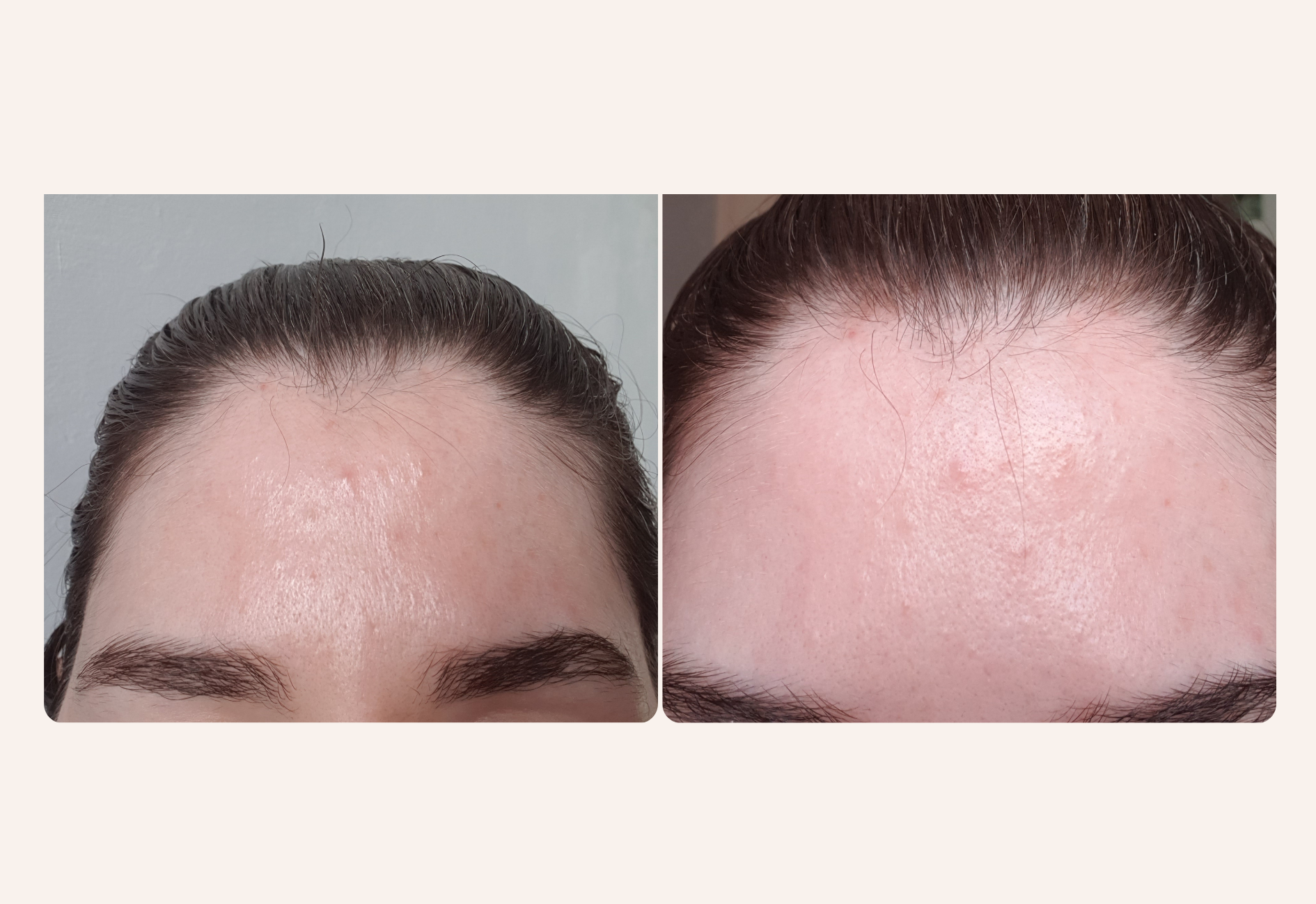
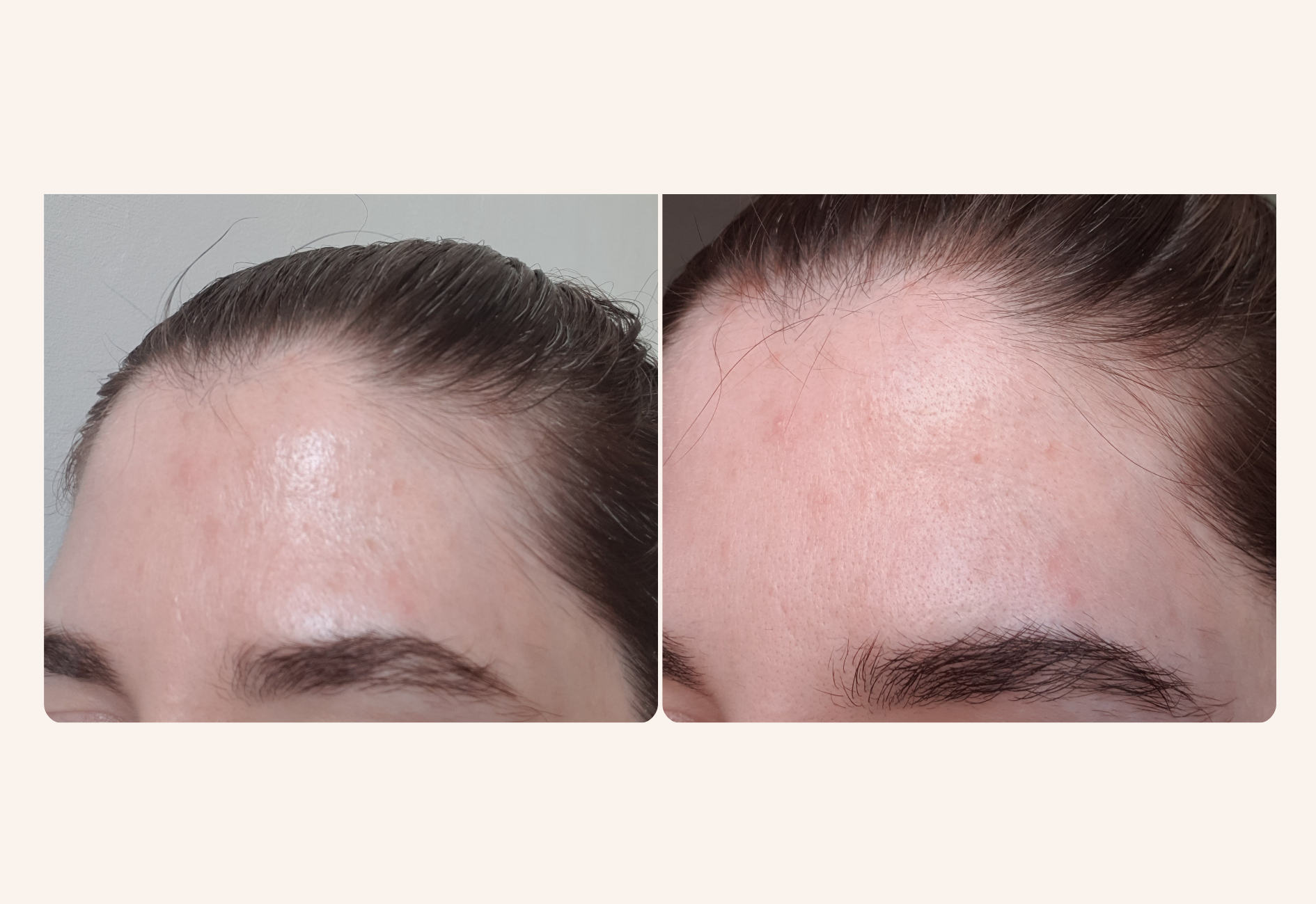
PS: The photos were taken under different lighting and angles. I did my best to capture my skin as accurately as possible, but some breakouts aren’t as visible in the pictures as they were in real life.
What Is Skin Purging?
Purging is a common reaction when using products that increase cell turnover, like tretinoin or azelaic acid. These actives push out impurities, dead skin, and clogged pores from deep within.
So you may see more breakouts, redness, or dryness. It can be stressful, especially when you expect your skin to look better quickly. But in reality, purging is often a sign that the product is working and cleaning out your skin deeply.
It usually lasts a few weeks, then your skin becomes clearer, brighter, and breakouts fade away.
Why Did I Purge After Using These Products for Years?
You might think that if you’ve used tretinoin and azelaic acid for years, your skin wouldn’t purge again. But that’s not always the case. When you take a break, specially a long one, your skin can lose some of its tolerance. The skin barrier may get weaker or more sensitive, or simply forget how to handle powerful ingredients.
Restarting your skincare routine is like starting fresh: your skin needs to build tolerance again, and that can lead to purging. That’s exactly what happened to me. Even with experience, my skin needed time to readjust.
How I Handled the Purge
When I saw the first breakouts, I tried not to panic. It’s never fun to see your skin react, but I knew it was likely a purge. So I didn’t stop everything, I just slowed down.
I went from using tretinoin several nights in a row to once every other night, or even once every three nights if my skin felt too sensitive.
I didn’t try to add new products to “fix” the situation. I just focused on the basics: hydrating well, supporting my skin barrier, and staying consistent, without overdoing it!
And most importantly, I never skipped sunscreen. It’s a must when using these kinds of products. Patience was key and your skin needs time to adjust, but the purge always passes eventually. (By the way, I talk more about why patience matters in skincare in this article: “The Secret to Beautiful Skin: Patience, Consistency, and Understanding Your Skin“)
Tips to Handle or Minimize a Skincare Purge
- Restart slowly: space out active products and increase gradually based on your skin’s tolerance
- Hydrate a lot: good hydration supports your barrier and reduces irritation
- Avoid layering too many actives: don’t use tretinoin, exfoliating acids, and other strong ingredients all at once, especially during a purge. Don’t add new actives while your skin is already reacting!
- Always wear sunscreen: tretinoin makes skin more sensitive to UV rays, SPF is essential!
- Listen to your skin: if it’s red, dry, or uncomfortable, just slow down or take a break
- Be gentle, not aggressive: consistency and kindness to your skin go further than harsh routines.
- It gets better: the purge doesn’t last forever, just be patient and trust the process!
Skincare Routine, Purging, and Consistency: What This Taught Me
This experience reminded me of something important: even if your skin knows a product well, it might still need time to adjust after a break. Skincare isn’t fixed, it’s about staying in tune with your skin, even with familiar actives.
I also rediscovered the value of consistency. Long-term results usually come from a steady, well-adapted routine. It’s not always easy, but this regularity helps the skin stay balanced and improve over time.
And of course, if a purge lasts too long, becomes painful, or shows unusual signs (intense redness, burning, itching), it’s best to see a dermatologist. A professional can help adjust your routine and avoid pushing your skin too far.
5 Key Things to Remember If You’re Restarting Tretinoin or Azelaic Acid
- Purging can still happen, even after years of use
If you took a long break, your tolerance may have dropped. It’s normal to need a readjustment period. - Go slow
Start with 2 nights per week, then increase based on your skin’s response. Don’t rush it. - Hydration and protection first
A strong skin barrier is key to handling actives. Rich moisturizer and SPF are must-haves. - Pay attention to your skin’s signals
Redness, dryness, discomfort = slow down or pause. You don’t need to push through pain. - Don’t forget the neck and chest… but be gentle
These areas can be more sensitive. What works on your face might be too strong elsewhere (and this deserves its own article :))
Final Thoughts: Stay Motivated and Trust Your Skin
Restarting your skincare routine after a break can be tricky, especially when purging shows up. But it’s part of the process, and it’s worth sticking with it. The most important thing is to listen to your skin, respect its needs, and adjust your routine when necessary.
With patience and consistency, results will come. So, stay positive, take care of yourself, and try to make your routine something you enjoy, not a chore! Your skin will thank you!
What about you? Have you ever experienced purging after getting back into your skincare routine? How did your skin react to actives like tretinoin or azelaic acid? Feel free to share your experience in the comments, I’d love to hear your thoughts!
See you soon,
Beautifully Moi
 Beautifully Moi
[…] English version here […]
LikeLike
[…] I documented that purge to show that yes, even after years of use, purging can still happen (read here the full story). Sure, it’s more manageable (because you know your skin better with time), but […]
LikeLike