- What is PIE (Post-Inflammatory Erythema)?
- What PIE really looks like on the skin
- Who is more likely to develop PIE?
- Why does PIE appear after inflammation?
- How long do PIE red marks last?
- How to fade PIE naturally and safely
- PIE vs PIH: how to tell the difference easily
- My real experience with PIE (+ pictures)
- In summary: key things to remember about PIE
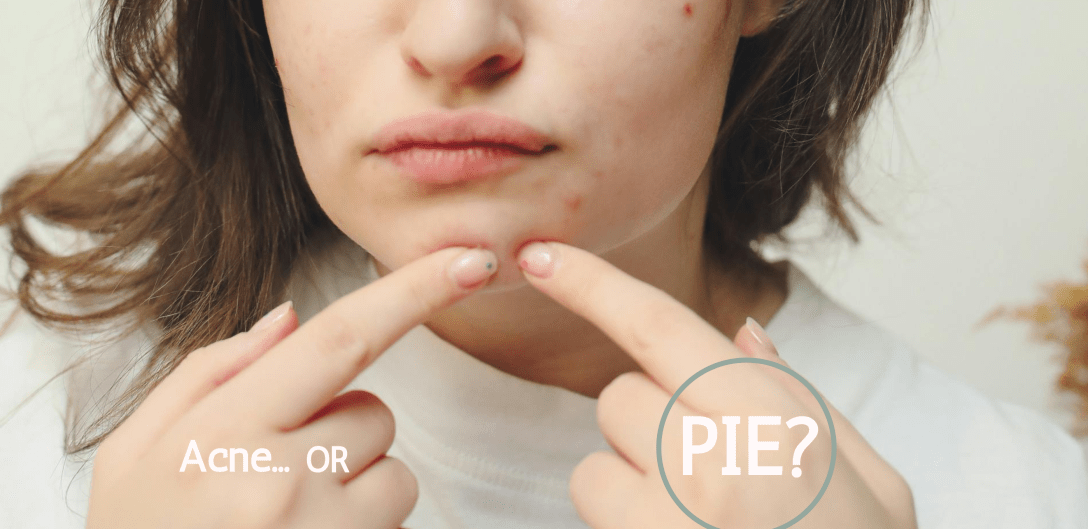
Many people think they still have “acne” when they notice red marks staying on their skin even after the pimples are gone. But in many cases, it’s not active acne anymore, it’s something called PIE, or Post-Inflammatory Erythema, which is very common even though not many people know the name.
For a long time, I had no idea what it was either. I could tell it wasn’t acne, but it also didn’t look like eczema or something I could easily recognize. One day, I came across a dermatologist talking about PIE on Instagram, and it was such a relief! Finally there was a name for those small red spots that appeared from time to time and sometimes disappeared before I could show them to a professional.
Understanding PIE helps you know your skin better and choose the right products so the marks fade faster and don’t stay for months.
What is PIE (Post-Inflammatory Erythema)?
Post-Inflammatory Erythema (PIE) is a pink, red, or slightly purple mark that appears on the skin after inflammation.
It’s not an active pimple anymore; it’s the trace that remains after the skin has healed.
You can imagine it like a small bruise under the skin, except instead of blue tones, the mark is red because the tiny blood vessels under the surface stay dilated and visible.
How to recognize PIE:
- it’s not a pigmentation mark,
- it’s not a brown spot (that would be PIH – Post-Inflammatory Hyperpigmentation),
- it’s not an active breakout,
- it comes from dilated or fragile blood vessels after the inflammation.
In short: PIE is your skin showing that it reacted to something and is still repairing itself.
What PIE really looks like on the skin
PIE appears as small red, pink, or slightly purple spots on the skin.
They usually show up after a pimple, scratching, or irritation, and are often small, round, and localized.
It is very common to confuse PIE with:
- acne that “won’t go away,”
- scars,
- pigmentation marks.
The important thing to remember is: There is no active inflammation anymore. The skin is healing, but the blood vessels are still visible.
You might feel like your skin “never recovers,” but actually, your face is slowly repairing itself. Recognizing PIE for what it is helps you adjust your skincare routine and avoid making things worse.
-> If you want to see what PIE actually looks like on a skin, I’ve added my own photos in the “My experience” section at the end of the article!
Who is more likely to develop PIE?
Anyone can get PIE, but some people are more likely to experience it:
- people with fair skin (because redness is more visible),
- people who have acne or occasional breakouts,
- those who touch or squeeze their pimples,
- people with sensitive or reactive skin or who use irritating products too often (strong acids, retinoids, harsh scrubs…).
PIE is not rare, but many people don’t realize they have it, especially if the marks appear and disappear quickly.
Why does PIE appear after inflammation?
When a pimple or irritation forms, your body sends blood and repair cells to the area.
When the inflammation is finished, the tiny vessels may stay enlarged and visible under the skin for some time, which creates the red or pink mark.
So PIE is vascular, not pigment-related. It’s simply a sign that your skin reacted and is now in the healing phase.
How long do PIE red marks last?
The duration of PIE varies a lot from person to person.
Without treatment, it can:
- disappear in a few weeks,
- stay several months,
- or last even longer if the skin is very reactive or if breakouts happen often.
Several factors influence how long PIE stays:
- how frequently your skin gets inflamed,
- your skin type,
- the products you use,
- and especially sun exposure: UV can make PIE more visible and slow down the healing process.
How to fade PIE naturally and safely
Here are some simple ways to help the skin recover faster:
✔ Daily sunscreen: the #1 anti-PIE habit
UV light makes all post-inflammatory marks worse.
Even on cloudy days, apply sunscreen appropriate for your face.
✔ Gentle routine to reduce irritation
Avoid:
- harsh exfoliation,
- strong acids too often,
- abrasive physical scrubs.
The idea is to let the skin rebuild itself without irritating it.
✔ Skincare ingredients that help fade PIE
(According to dermatologists)
- Niacinamide (4–10%) → reduces inflammation and strengthens the skin barrier.
- Azelaic acid (10–20%) → great for redness and acne-prone skin.
- Centella asiatica, panthenol, allantoin, madecassoside → soothing and repairing.
- Retinoids (retinol, adapalene, etc.) → speed up skin renewal but must be introduced slowly if your skin is sensitive.
- And according to me, Baby diaper cream (my personal secret that works!) → I often use a baby diaper rash cream to calm inflammation. The zinc helps reduce redness, protect the skin, and speed up healing. I even wrote a separate article about why I love it so much that you can read here.
✔ When to seek medical treatments
If PIE doesn’t go away despite a gentle routine and sun protection, vascular laser treatments (like PDL) performed by a dermatologist are the most effective solution to remove stubborn red marks.
PIE vs PIH: how to tell the difference easily
Here’s a simple comparison to help you understand:
| Feature | PIE | PIH |
| Color | Red / pink / purple | Brown (extra melanin after inflammation) |
| Cause | Visible blood vessels | Excess melanin |
| Duration | Weeks to months | Often months to years if untreated |
| Most visible on | Fair skin | Darker skin tones |
| Reaction when you press on it | May lighten or fade for a moment | Doesn’t change |
A quick tip: If the mark is red and disappears slightly when you press on it, it’s probably PIE. If it stays brown, it’s likely PIH.
Knowing the difference helps you choose the right products and avoid harming your skin.
My real experience with PIE (+ pictures)
I have very fair skin, and I started noticing PIE more clearly after finishing my Roaccutane treatment. When I still had acne and a bit of rosacea, I wasn’t really paying attention to those small red marks—I was focused on the breakouts themselves and probably thought the marks were just another pimple.
Once my acne disappeared, I started seeing PIE show up clearly. What surprised me the most is that mine doesn’t always appear after pimples.
Sometimes I just wake up with several small red spots, without any breakout before.
At first, I even thought it might be eczema, so I stopped using tretinoin to avoid making things worse. Instead, I focused on a gentle routine based on what truly works for me.
And honestly, it makes sense that I get PIE: I used to have rosacea, small angiomas, and visible veins around my nose, so my blood vessels are naturally more reactive.
My main hero product is baby diaper cream. I only apply it at night on the red areas, and it works incredibly well: within 3 to 4 days, the marks disappear completely. The zinc soothes the skin, protects it, and speeds up the healing process. I even wrote a full article about diaper cream for sensitive skin, which you can read here: Baby cream for sensitive skin
I also use azelaic acid, which helps calm redness and supports repair. Now, whenever PIE appears, I just apply the diaper cream (and azelaic acid when needed), and it fades very quickly every time.
I added photos below so you can see what these little red marks look like on my skin.

In summary: key things to remember about PIE
PIE (Post-Inflammatory Erythema) is a red or pink mark that appears after a pimple or skin irritation.
It is not:
- acne,
- pigmentation,
- or eczema.
Here is what you should remember:
- PIE is red/pink, sometimes purple, and may lighten when you press on it.
- PIH is brown, caused by excess melanin, and lasts much longer.
- To help it fade:
- use daily sunscreen,
- choose gentle and soothing skincare (niacinamide, azelaic acid, repairing creams),
- avoid harsh scrubs and strong irritation,
- and persistent cases may benefit from vascular laser treatments.
My personal routine: With azelaic acid + baby diaper cream applied only at night on the red areas, my PIE disappears in 3 to 4 days, which is very fast.
PIE can be frustrating when you don’t know what it is, but with patience, gentle care, and good sun protection, it usually fades quickly and rarely leaves long-term marks.
So, did you already know that these little red marks are called PIE, or are you just learning it like I did? Tell me in the comments 🙂
See you soon, Beautifully Moi!
 Beautifully Moi