
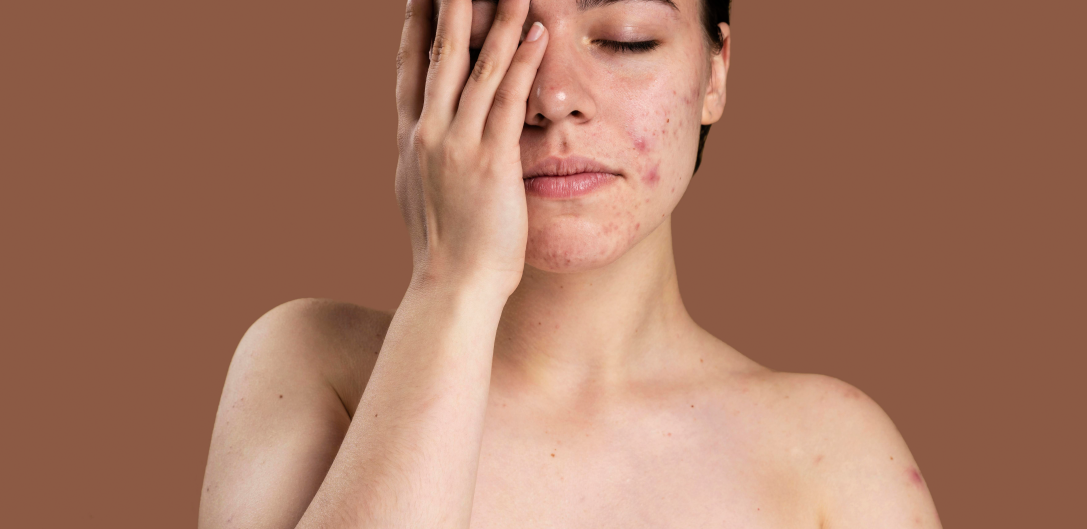
Before I continue sharing my experiences with acne, I’d like to share with you an article to better understand what acne is, where it comes from, how it develops, the different types of existing acne, and the treatments prescribed by doctors. This article serves purely as an informational resource to provide you with all the available information.
Acne
Acne is one of the most common skin conditions, affecting millions of people, primarily young adults, worldwide! This condition impacts around 9.4% of the global population, with the highest prevalence among adolescents. It affects over 90% of men and 80% of women across all ethnic groups1. However, adult acne is increasingly affecting women (acne after 25 years old – see more in the article).
Acne is an inflammatory condition of the pilosebaceous follicle, occurring when sebum and dead skin cells block the hair follicles.
What is a hair follicle? It’s a cavity where hair grows. Hair is produced through the process of keratinization2. With the sebaceous glands responsible for synthesizing and secreting sebum, the hair follicle opens up, promoting sebum secretion which lubricates the hair and protects the skin from dryness and infections.
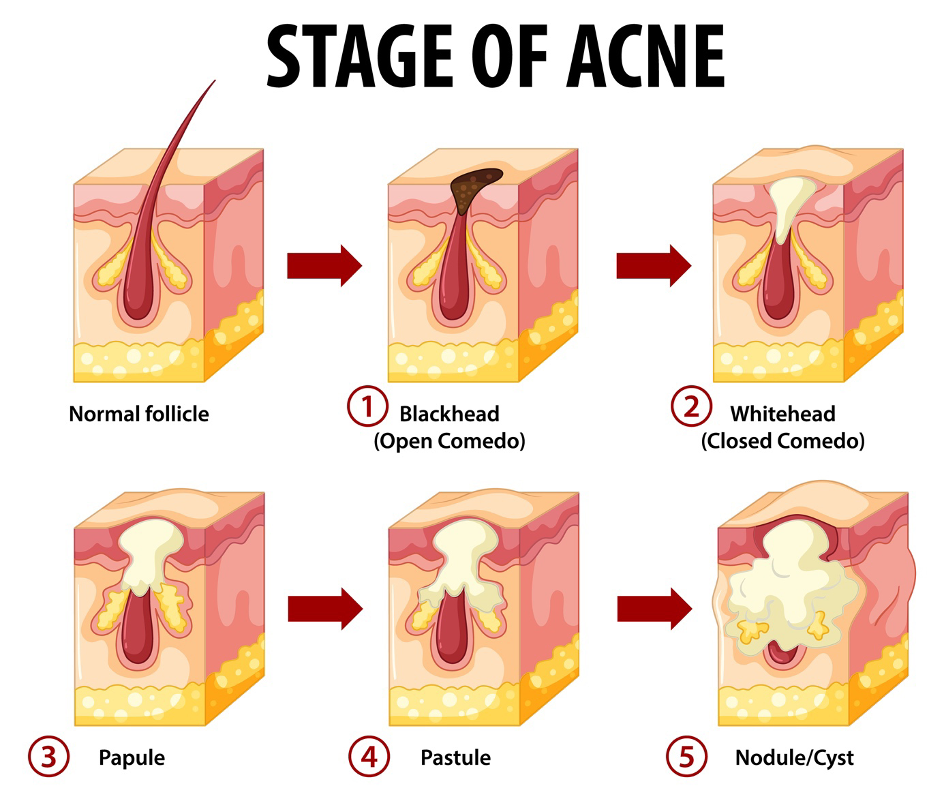
Acne develops due to an overproduction of sebum, which thickens. The sebum cannot evacuate properly, leading to abnormal multiplication of the bacteria already present on the skin, responsible for acne – Propionibacterium acnes. This multiplication transforms the sebum into irritating fatty acids, resulting in the appearance of pimples and blackheads.
Types of Blemishes
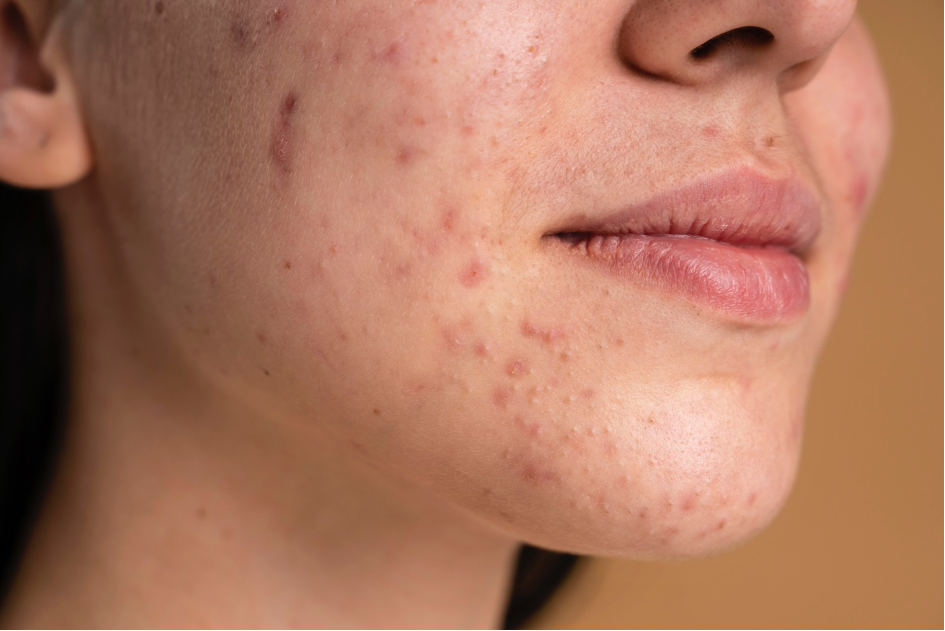
• Closed Comedones: These are small white bumps. These microcysts can subsequently open up and become open comedones (blackheads) or inflame and become papules or pustules.
• Open Comedones: These are blackheads. The black color results from the oxidation of sebum exposed to air.
• Papules: These are red bumps that can evolve into pustules.
• Pustules: These are pus-filled bumps.
• Cysts: Red nodules filled with pus.
• Nodules: Present in severe forms of acne. They are beneath the skin and may progress into abscesses.
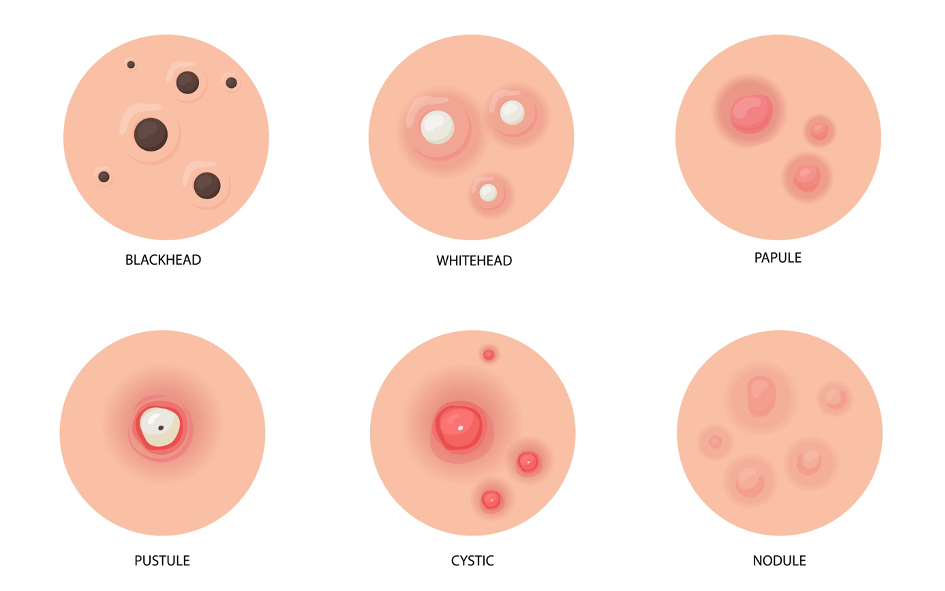
They appear on the skin as follows:
Causes
Hormonal, Genetic
The testosterone level (androgenic hormone) – the male sex hormone responsible for acne – significantly increases during puberty, leading to overproduction of sebum and consequent appearance of blemishes. Once puberty is over, testosterone levels stabilize in men, but they still fluctuate in women, potentially leading to hormonal/adult acne (see below).
Studies show that a genetic predisposition plays a role in acne. If both parents have had acne, the risk that their child will be affected by acne is higher. Genetic factors influence the severity of acne symptoms and could be the root cause of other skin and hair problems3.
Interesting information: In February 2022, researchers in London discovered 29 new genes responsible for the onset of acne – bringing the total number of genes to 46. This discovery will enable researchers to better understand the origins of acne and pave the way for new treatments to combat this skin condition!4
Medication, Stress, Sun, and Oily Cosmetics
Some medications can have acne as an unwanted side effect. Prolonged use of these medications can thus promote its appearance.
Stress (cortisol) is not a direct cause of acne. However, due to stress, the production of male hormones may increase and worsen existing acne! (This was my case two years ago! I’ll share more details in a future article.)
Beware of the sun, which can be deceiving. Indeed, UV rays dry out the skin’s upper layer along with the bacteria responsible for acne. This camouflages the pimples, and the skin texture appears smoother. However, once the sun’s effects diminish, there’s a rebound effect! The thicker skin struggles to eliminate dead cells, sebum, and other impurities, leading to clogged pores and favoring the appearance of blackheads, microcysts.
Lastly, the use of excessively oily, occlusive, or comedogenic cosmetics may also clog pores, thus promoting the appearance of pimples.
Diet
The role of diet in the onset of acne isn’t very clear and often contentious. I consulted several dermatologists, and many of them told me that diet doesn’t play a role in my persistent acne. However, it’s quite surprising since diet did affect my sister’s acne… (Would you be interested in her testimony?)
Recent studies have demonstrated the impact of diet on acne and its treatment. For instance, the consumption of milk or a low glycemic index diet. This area will be explored in another article due to the complexity of the subject.
Stay tuned for the upcoming article!
Different Types of Acne
Juvenile Acne
The most common, usually occurring during puberty or pre-puberty, between the ages of 12 to 20. It’s characterized by the appearance of various types of blemishes, making it a polymorphic or mixed form.

Hormonal or Adult Acne
Women are more affected by adult acne than men. In women, acne often appears around the jawline, while in men, it’s more frequent on the back and neck. Many women notice the emergence of pimples just before their menstrual cycles, confirming hormonal influence. Indeed, during the premenstrual period, androgen production, the male hormone involved in acne, peaks.
Infantile Acne
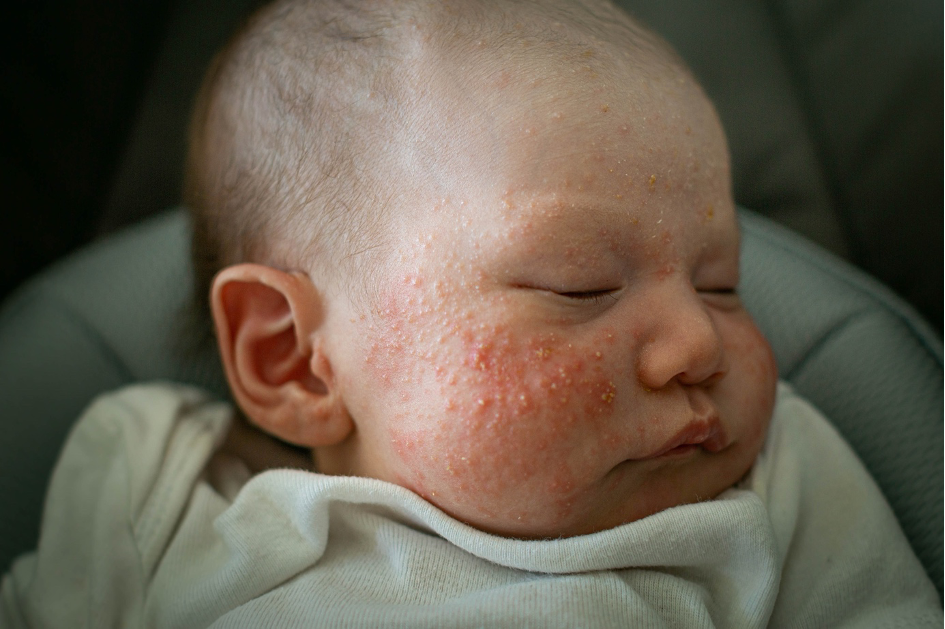
Infantile acne is quite common and benign, affecting about one in two babies. It presents as a breakout of red, pink, or white bumps on the forehead, cheeks, and chin.
It appears in the first days of a baby’s life and is related to the strong hormonal surge experienced by the mother at the end of pregnancy. The baby, influenced by these hormones, reacts to this hormonal surge.
It typically disappears within a few weeks without any specific treatment.
Diagnosis
Diagnosing acne is typically done quite quickly through a simple skin examination. The type of acne is promptly identified, allowing the doctor to determine its severity. This helps to assess whether the acne is mild (presenting blackheads and/or whiteheads), moderate (blackheads, whiteheads, pimples, and cysts), or severely inflammatory (having blackheads and/or whiteheads, pimples, and the formation of cysts en masse).
Caution: In the case of severe acne in women with irregular menstrual cycles, an additional hormonal examination will be recommended by the doctor. They will then be referred to a gynecologist and/or endocrinologist.
Treatments
Treatments prescribed by doctors can be either topical or medicinal. In this section, I will simply list the treatments, but they will be discussed in detail in another more comprehensive article.
Topical Treatments
- Topical retinoids
- Benzoyl peroxide cream
- Local antibiotics containing erythromycin or clindamycin
Curious to dive deeper into retinoids?
Get my 32-page beginner-friendly retinoid guide for free when you subscribe [here], or grab it anytime on Gumroad for just €4.90 [here]!
Medicinal Treatments
- Antibiotics from the tetracycline or macrolide family, or erythromycin if contraindicated for tetracycline use
- Zinc supplements for mild to moderate acne
- Isotretinoin (commonly known as Roaccutane)
- Hormonal treatments (the pill) – exclusively for women
- Spironolactone – has anti-androgen activity and is an interesting alternative for treating adult female acne.
The treatments with local applications are often linked to medical treatments unless the doctor prescribes isotretinoin; a local treatment, because it’s highly drying, should be avoided!
I want to clarify that this article is purely for informational purposes! You should always consult and listen to your doctor! I do not provide advice, diagnosis, or prescribe any treatment. This is the doctor’s role.
Acne is a common skin issue affecting many people. It happens because of things like hormones, genes, and the environment. Understanding acne is essential for finding the right treatment. While this article explains different aspects, remember, it’s best to see a doctor for the right advice. Not all information online is accurate. It’s important to keep talking to your doctor for the best help.
Thank you for reading. Stay tuned for the next part of my acne journey. Beautifully Moi, sharing more soon!
See you soon!
- Source: National Library of Medicine ↩︎
- Source: Wikipedia Keratin : Family of proteins, the primary component of hair, hair, and nails. Hair is made up of 95% which protects it from UV rays, saltwater, and other external factors. ↩︎
- Source: Ouest France Article ↩︎
- Source: Slate Article ↩︎
 Beautifully Moi
[…] English version here […]
LikeLike