

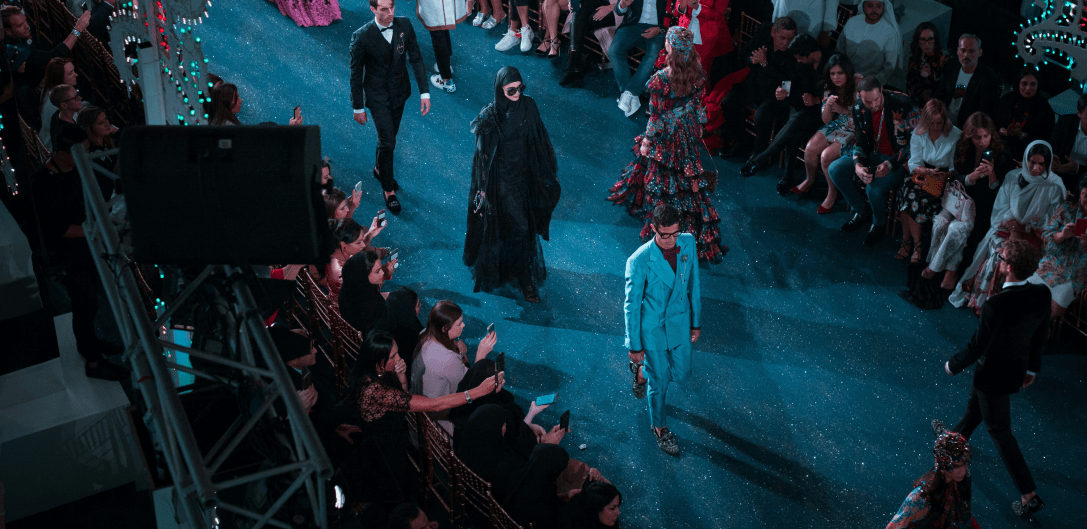
- Fashion Week
- Fashion Week and Haute Couture Fashion Week
- Men’s Fashion Week
- Selection of Designers for Fashion Weeks
Mid-January marks the beginning of Men’s Fashion Week, and you’ve likely seen on social media brands like Louis Vuitton, Gucci, Armani, and others unveiling their Fall/Winter 2024 collections.
The Fashion Week, also known as “traditional/Ready-to-Wear/Women’s,” The Men’s Fashion Week, and The Haute Couture Fashion Week, are major events in the fashion industry that typically occur twice a year in key fashion capitals such as New York, London, Milan, and Paris. These events provide fashion designers with the opportunity to showcase their new clothing and accessory collections to the media, buyers, and the public.
Fashion Week
Fashion Week, a dedicated week in the fashion world, provides fashion designers (stylists and couture houses – The Maisons) with the opportunity to showcase their new ready-to-wear and haute couture collections. Held twice a year, creators, stars, celebrities, fashion influencers, and fashion enthusiasts come together to get a sneak peek at the latest trends.
Each Fashion Week is typically divided into two seasons: Spring/Summer Fashion Week and Fall/Winter Fashion Week.
This event is not only a crucial moment for fashion creators but also plays an essential role in the fashion industry as a whole. Fashion Week allows brands to gain recognition, emerging designers to stand out, and media and buyers to identify the next big trends.
In addition to the main runway shows, Fashion Week often includes parallel events such as presentations, exhibitions, parties, and networking opportunities. It attracts figures from the fashion industry, celebrities, journalists, and fashion enthusiasts from around the world.
Fashion Week is, therefore, a key moment for the fashion industry, influencing upcoming trends and contributing to shaping the global fashion landscape.
Its History
It dates back to the early 20th century and has evolved over the decades to become one of the most significant events in the fashion industry.
- 1940s: Beginnings in New York

While Paris introduced the concept of fashion shows, the first significant gathering around these runway presentations took place in New York. The inaugural Fashion Week, as we know it today, began in New York during the 1940s. It was a response to the dominance of Parisian fashion, traditionally considered the epicenter of haute couture. The idea was to create an event that would highlight American fashion designers and foster the fashion industry in the United States.
- 1950s-1960s: Emergence in Milan

Over the years, the Fashion Week expanded to other major fashion capitals. Milan, in particular, joined New York and held its inaugural Fashion Week in 1957. Milan emerged as a major center for fashion shows with its distinct style. It began featuring presentations of collections for the upcoming season, with runway shows organized by renowned couture houses.
- 1970s: Expansion to Paris

The Fashion Week continued its expansion to other cities. In 1973, the first Fashion Week in Paris was organized. The event gained international prominence, capturing the attention of media worldwide. The introduction of ready-to-wear collections broadened the scope of Fashion Week, making it more accessible to the general public.
- 1980s and 1990s: Consolidation and Diversification with London’s Inclusion

The 1980s and 1990s witnessed the Fashion Week solidifying its status as a pivotal event in the fashion industry. London also joined the movement, hosting its inaugural Fashion Week in 1984. The diversification of styles, designers, and brands played a crucial role in making Fashion Week a significant platform for emerging designers and luxury brands.
- 2000s to Today: Digitalization and Expansion

With the advent of the internet and social media, Fashion Week underwent a significant digitization. Runway shows are now live-streamed online, enabling a global audience to follow events in real-time. The event has also diversified with the introduction of Men’s Fashion Week, Haute Couture Fashion Week, and specific events showcasing emerging designers.
The Different Types of Fashion Weeks
There are several types of Fashion Weeks that focus on different categories of fashion. We can distinguish:
- Fashion Week “Traditional”, “Women” or “Ready-to-Wear”: The most common and widespread, presenting ready-to-wear collections for women but also men.
- Men’s Fashion Week: Dedicated to men’s fashion collections, it can take place separately or concurrently with the “traditional” Fashion Week.
- Haute Couture Fashion Week: Focuses on bespoke and high-end creations. Exclusive to Paris.
- Sustainable Fashion Week (Eco-Fashion Week): Highlights environmentally friendly and sustainable creations, aiming to promote ethical and responsible fashion.
- Accessories Fashion Week: Showcases collections of fashion accessories such as handbags, shoes, jewelry, etc.
- Specialized Fashion Weeks: Some Fashion Weeks may focus on specific segments of fashion, such as lingerie, swimwear, bridal gowns, etc.
In this article, our focus will be on the most well-known Fashion Weeks, namely the “traditional/ready-to-wear/women’s,” Men’s Fashion Week, and Haute Couture.
Fashion Week and Haute Couture Fashion Week
Distinct events exist for ready-to-wear and haute couture, although both categories may be showcased during the same Fashion Week.
An upcoming article will delve into the differences between ready-to-wear and haute couture in more detail. In essence, ready-to-wear refers to mass-produced clothing and accessories available in stores for the general public, while haute couture pertains to custom-made, handcrafted garments designed and created for specific clients by high-end couture houses.

The “Ready-to-Wear” Fashion Week, referred to here as the Fashion Week, also includes collections from luxury brands, in addition to creations from emerging designers and accessible brands. The ready-to-wear showcased during this event varies in terms of price range, styles, and brands. High-end couture houses and luxury brands may present their ready-to-wear collections, which are generally more accessible than their haute couture creations. Simultaneously, emerging designers and more commercial brands also unveil their ready-to-wear collections.

The Haute Couture Fashion Week, a distinct event from the Fashion Week, exclusively focuses on haute couture creations. It is commonly associated with Paris and takes place solely in the French capital. This prestigious event captures worldwide attention, showcasing exceptional craftsmanship, creativity, and innovation in the fashion industry.
Haute Couture Fashion Week is often regarded as a more exclusive affair, dedicated to the extraordinary creations of couture houses.

It’s important to note that the term “haute couture” is protected by law in France and can only be used by couture houses (The Maisons) that meet specific criteria defined by the Chambre Syndicale de la Haute Couture. A more detailed article on this subject will be published very soon!
Where do they take place?
Fashion Week kicks off in New York, followed by London, then Milan, and concludes in Paris.
The order in which Fashion Weeks occur is not arbitrary. It partly reflects the influence and renown of these cities in the fashion world but is also linked to the business calendar of the fashion industry.
Buyers and retailers have the opportunity to see collections first in New York before moving on to other destinations, thus facilitating the purchasing process.
As for Haute Couture Fashion Week, it exclusively takes place in the French capital, Paris.
When do they take place?
Fashion Week occurs multiple times a year in different cities worldwide, each corresponding to a specific season. It is strategically planned to showcase upcoming collections, allowing retailers time to place orders for selling during the appropriate season.
The schedules for FW 2024 are as follows: New York, London, Milan, and Paris.
- Spring/Summer collections: generally in September/October
- Fall/Winter collections: generally in February/March
Haute Couture Fashion Week takes place twice a year.
The schedule for HCFW 2024 is in Paris
- Spring/Summer collection: January
- Fall/Winter collection: June/July
The schedules of Fashion Weeks evolve, so it’s important to consult official sources for exact dates and the order of events. Here are the official websites:
- New York: Council of Fashion Designers of America (CFDA)
- London: London Fashion Week
- Milan: Camera Nazionale della Moda Italiana
- Paris: Fédération de la Haute Couture et de la Mode for Paris
These websites provide official information on fashion events, including details about Fashion Week in each city.
Men’s Fashion Week

With the growing interest in men’s fashion, the fashion industry has become aware of and recognizes the significance of the men’s fashion market.
Although the goal remains the same for both Fashion Weeks, these two events, featuring collections that differ from each other, take place at different times with specificities unique to each.
Men’s Fashion Week allows for a more specific showcase and distinct celebration of creativity and innovation in men’s fashion. It may include specific elements such as tailoring trends, technical details unique to men’s clothing, and accessories specific to men’s fashion.
By separating the Fashion Weeks, organizers can better cater to the specific needs of designers, buyers, media, and the audience in each domain. This strengthens the recognition of men’s fashion as an independent and influential component of the fashion industry.
Where does it take place?
Men’s Fashion Week typically starts in Milan, followed by Paris and then London.
As for New York Men’s Fashion Week, it is integrated into the “Traditional/Women” Fashion Week (NYFW). Men’s collections are presented within NYFW, which covers both women’s and men’s fashion. However, the organization of events and how men’s collections are integrated into NYFW can vary.
When does it take place?
Paris Men’s Fashion Week typically precedes Haute Couture Fashion Week. It occurs twice a year, showcasing collections for the upcoming seasons.
The schedules for MFW 2024 are as follows: Milan, Paris, and London*.
- Spring/Summer collection: generally in June
- Fall/Winter collection: generally in January
However, schedules may evolve, so it’s crucial to consult official sources mentioned earlier in the article. (Council of Fashion Designers of America (CFDA) ; London Fashion Week ; Camera Nazionale della Moda Italiana et la Fédération de la Haute Couture et de la Mode pour Paris)
*This year, London Fashion Week will celebrate its 40th anniversary. To commemorate this event, London Fashion Week (Women’s) and London Men’s Fashion Week will take place simultaneously!
Selection of Designers for Fashion Weeks

Whether it’s for (Ready-to-Wear/Traditional/Women) Fashion Week, Men’s Fashion Week, or Haute Couture, designers go through competitive and category-specific selection criteria. These criteria may also vary from city to city, but in general, they follow a fairly similar process.
Of course, renowned brands and couture houses (The Maisons) often have guaranteed spots due to their status in the industry.
Interested designers typically submit an application or registration request to participate in the event, which will then be evaluated and reviewed by Fashion Week organizers based on the type of Fashion Week, creativity, originality, previous experience, and relevance to current trends. Check the application requirements on the official websites of each Fashion Week in different countries (New York, London, Milan, and Paris).
The applications are then selected if they best align with the overall vision of the event, and a runway schedule is subsequently developed by organizing the designers to create a cohesive flow and highlight a diversity of styles.
For Haute Couture Fashion Week in Paris, the process is a bit more stringent and exclusive. Designers must adhere to very strict criteria set by the Chambre Syndicale de la Haute Couture. The selection process is highly regulated and reserved for a limited number of couture houses (The Maisons) that meet the very high standards of bespoke creation and craftsmanship.

Each Fashion Week has its own selection process, distinct schedule, and specific criteria, contributing to the creation of a dynamic mosaic of creativity and innovation. These iconic events continue to play a central role in shaping trends and showcasing the exceptional talent of designers worldwide.
The diversity of Fashion Weeks, whether it’s ready-to-wear, men’s fashion, haute couture, or other specialized segments, reflects the richness and variety of the fashion industry.
These events are essential platforms for designers, brands, and fashion professionals, offering insights into the latest trends and celebrating creativity. Digitalization has expanded the global audience of Fashion Week, making it an unmissable moment for the fashion industry.
I hope this article has provided you with more details about this iconic fashion event. The Fashion Weeks are set to take place very soon, and I will then share my favorites as a minimalist. I’m trying to step out of my comfort zone and so I explore bolder and edgier pieces, so I won’t be presenting just basics, let’s say!
What about you? Ready for Fashion Week? How does the global event of Fashion Week inspire and shape your personal style? What trends are you most excited to explore and embrace this season?
See you soon, Beautifully Moi!
 Beautifully Moi
[…] English version here […]
LikeLike