
- What is Chilblains?
- My Symptoms and Signs
- The Appearance of Chilblains – What It Looks Like for Me
- Causes and Risks: What Triggers It for Me
- Who is Prone to Chilblains? My Case?
- My Method for Preventing Chilblains
- My Remedies and Tips for Relief
- Essential Products for Preventing Chilblains
A few years ago, as soon as winter arrived, I started feeling itching and pain in my toes. My toes would become red and swollen, and the itching was so intense that I would scratch them against the carpet for relief! At first, I had no idea what was happening. I even thought it might be eczema… until my sister, who is a medical student, told me about chilblains.
What is Chilblains?
Chilblains are a mild skin reaction to cold and humidity, often considered the early stage before frostbite. When temperatures drop, the body limits blood flow to the extremities (like the toes, fingers, nose, and ears) to keep warmth where it really matters: around vital organs. This process can irritate the small blood vessels under the skin, causing the painful and swollen reaction we recognize as chilblains.
Unlike frostbite, chilblains don’t cause permanent damage, but it can be uncomfortable if it happens often or isn’t treated properly.
My Symptoms and Signs
Chilblains often show up as redness and itching, as I discovered during my first experience. Sometimes, the itching was so intense that I would scratch to the point of feeling a little pain! When they first appear and are still swollen, the pain can be particularly sharp with the slightest bump. For example, if I bump my toes (where it usually happens) it feels like when you accidentally bang your frozen hands on something: a little bump is enough to trigger a sharp pain, made worse by the cold that makes the skin more sensitive.
Strangely, it’s not this pain that alerts me to the return of my chilblains; I end up getting used to it without really connecting it to the chilblains. What really makes me aware they’re back are the persistent, intense itches. The skin becomes red and a bit swollen, and sometimes, dark red spots remain visible even after the itching stops.
In short, chilblains present several characteristic symptoms:
- Redness: The skin turns red or purple, often the first visible sign.
- Swelling: Inflammation leads to swelling, which can vary in intensity.
- Itching and burning: Chilblains cause discomfort, itching, and sometimes a burning sensation.
- Pain: Depending on the severity, the pain can be mild or intense.
- Color change: After the itching, dark spots may appear, indicating slight bleeding under the skin or the healing of the lesion.
The Appearance of Chilblains – What It Looks Like for Me
Visually, chilblains appear as small swollen areas, often bright red, especially at the tips of the toes, sometimes with a slight purplish tint. The inflammation gives them a slightly thick and shiny appearance, especially at the peak of irritation.
As they heal, they can leave behind dark red or purple spots that remind you of their presence. Here are some photos showing what my chilblains look like to help you recognize it better.
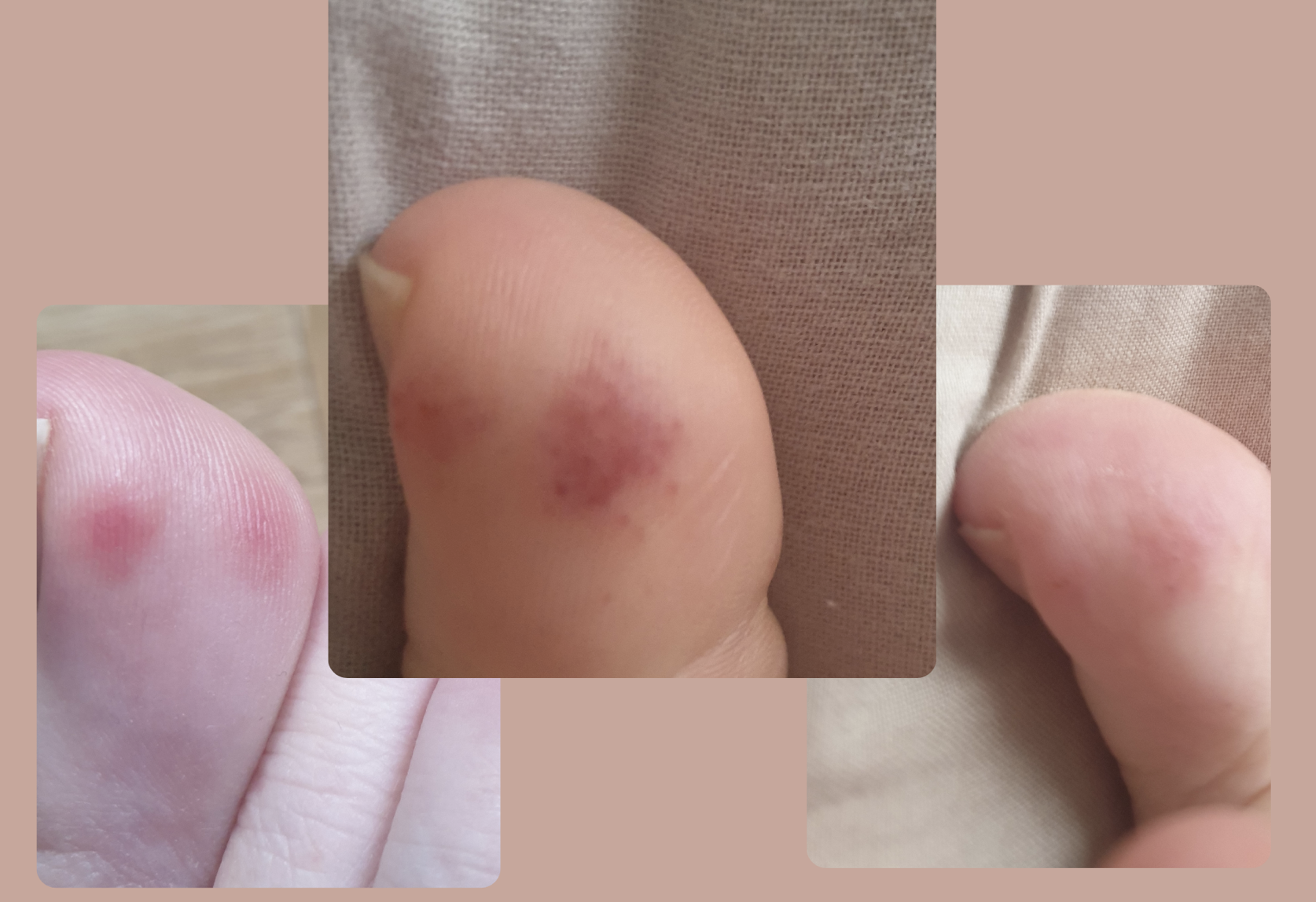
Here’s a look at the stages, from left to right: the first stage where it’s itchy and painful; the second stage, when the itching eases up, the color is more purplish, the pain starts to fade, and healing begins; and the final stage, where it’s fully healed. With a few remedies to keep my toes warm, it took about 20 days to heal completely!
Causes and Risks: What Triggers It for Me
Cold and humidity are the main triggers for chilblains. They are even more common in people like me, who often have cold extremities. At home, we don’t wear shoes (thanks to the Balkan custom!), and I even struggle to keep on socks.
As a result, my feet are often exposed to temperature changes, which encourage chilblains to appear every autumn and winter.
Several factors can increase the risk of chilblains:
- Reduced blood circulation: People with poor circulation are more likely to suffer from it, as the blood struggles to effectively warm the extremities, which is often the case for me.
- Exposure to humidity and cold: When my feet or hands are cold and damp, it amplifies the risk of chilblains, especially since humidity lowers my skin temperature even further (and let’s not even talk about my bare feet on the kitchen tiles!).
- Sudden temperature changes: Moving from a warm environment to extreme cold, like when I go outside without enough protection, also favors the appearance of chilblains.
- Personal habits: Walking barefoot or wearing inappropriate shoes exposes my extremities to the elements. I often walk barefoot at home, which only worsens the problem, especially on tile!
Who is Prone to Chilblains? My Case?
Some people are naturally more exposed to chilblains due to physiological factors or personal predispositions. As mentioned earlier, reduced blood circulation, exposure to cold or humidity, and having naturally cold extremities increase the risk. But also:
- Genetic predispositions: If family members easily suffer from chilblains, you may be more likely to develop it as well.
- Health factors: Certain medical conditions, like Raynaud’s syndrome, anemia, or cardiovascular issues, can make some people more reactive to cold, making chilblains more frequent or intense.
- Gender and body mass index (BMI): Studies show that women, especially those with a lighter body weight, are often more prone to chilblains. This might be due to a thinner layer of subcutaneous fat, which offers insufficient thermal insulation.
In my case, no one else in my family is prone to chilblains or has cold extremities, it’s just me! I don’t have Raynaud’s syndrome, and my last blood test showed no anemia.
At my next appointment with the dermatologist, I plan to show her my chilblains; who knows, maybe she will prescribe some tests? I’ll keep you updated!
06/05/2025 Update: After my visit to the dermatologist, she prescribed a cortisol cream to apply as soon as the first signs of chilblains appear. She also mentioned that people who tend to get chilblains may have a slightly higher risk of thyroid issues. So, she advised me to ask my GP to check my thyroid during a blood test. If you have chilblains or think you might, don’t worry! Go see a doctor first and talk to them, they’ll guide you! What I’m sharing here is simply what my dermatologist told me to help guide you.
I’m also a woman weighing 56 kg, which fits the typical profile for chilblains.
My Method for Preventing Chilblains
After realizing that my itching and redness were chilblains, I started preparing for winter. I adopted thick warm socks and slippers (because, let’s be honest, just socks aren’t enough for me!) as soon as temperatures drop. If, like me, you often have cold extremities, it’s crucial to take these measures at the start of the cold season!
Prevention is the best way to avoid chilblains. Here are some tips:
- Keep extremities warm: Wearing gloves (outside), thick socks, and shoes suitable for cold temperatures is essential.
- Dry well: Make sure your feet and hands are dry before going outside. Moisture makes the cold feel worse.
- Limit exposure to cold: Try to avoid spending long periods in cold environments without protection.
- Regular movement: Moving your toes and fingers regularly helps stimulate blood circulation.
- Moisturize your skin: Well-hydrated skin resists external aggressions better; regularly applying moisturizers can help maintain a protective barrier.
My Remedies and Tips for Relief
When chilblains appear, it’s often too late to completely avoid the symptoms, but I’ve found that warm foot baths and sleeping with a hot water bottle occasionally can really make a difference.
Each year, as soon as I feel the first signs, I take these precautions to calm the redness and prevent it from getting worse. Once the chilblains are there, I do everything I can to keep my feet warm.
From the photos I took at the beginning and today, it takes about 20 days for the chilblains to heal completely. When they turn purplish, it means they are starting to heal, and they don’t itch at all anymore!
(Watch out with the hot water bottle: don’t forget to put a cover around it to avoid burns. And make sure it’s not punctured and that the cap screws on properly.)
To treat chilblains, here are some useful tips:
- Gradually warm the affected areas: Avoid direct heat sources like radiators or hot water, as this can worsen inflammation. I always prefer a slow warming to room temperature to avoid making things worse.
- Use soothing creams: While creams containing anti-inflammatory or moisturizing agents can help relieve pain and inflammation, I must admit I’ve never tried this solution. It’s common advice, but I don’t follow it.
- Avoid scratching: I know the temptation is strong, but it’s important not to scratch to avoid worsening skin lesions. Unfortunately, I struggle to stop myself, which complicates things.
- Consult a healthcare professional: If symptoms persist or worsen, it’s crucial to see a doctor or dermatologist. For my part, I’ll be going soon to confirm my diagnosis and check if I need to undergo further tests.
Essential Products for Preventing Chilblains
Fortunately, there are plenty of products to keep our feet and hands warm. From thermal socks to hot water bottles, and cozy slippers, these practical solutions can make a huge difference in avoiding the discomfort and itching linked to chilblains.
There are even battery-powered heated socks that warm up quickly and have rechargeable batteries. I haven’t personally tested this product yet, as my slippers are enough for me for now, but if having cold feet is really unbearable for you, it could be an interesting option!
Here are some of my favorite items to face the autumn and winter months with ease.
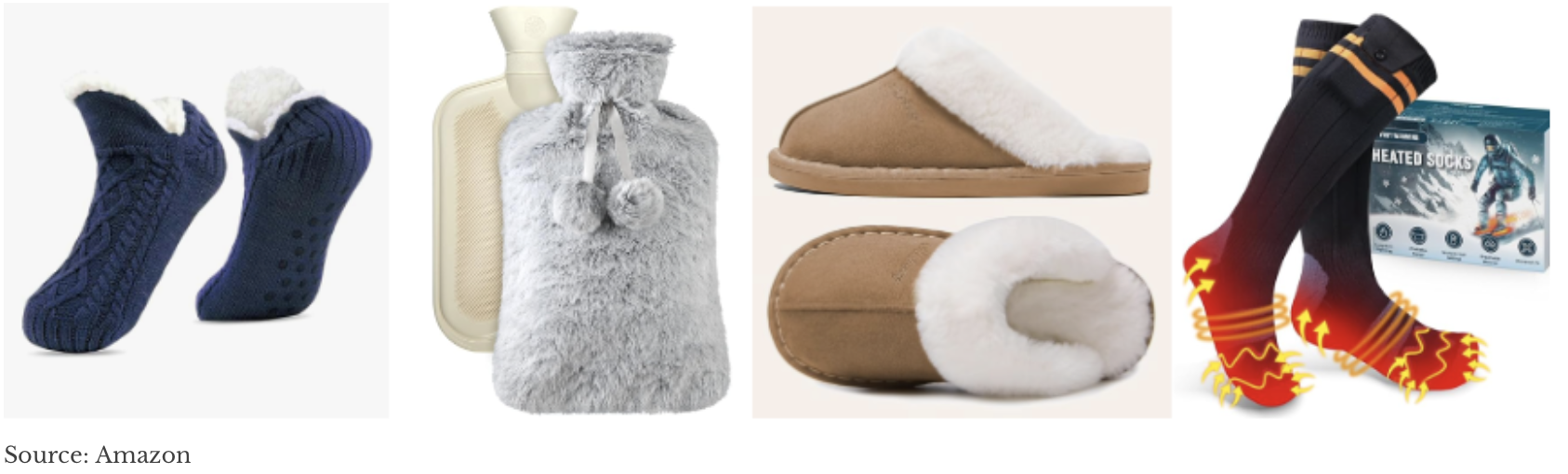
Even though chilblains aren’t serious, it can be very uncomfortable, especially when, like me, it comes back every winter. Over time, I’ve learned to anticipate and manage it by adopting better habits for my feet as soon as the first chills arrive. If you have chilblains or just want to avoid it, I hope my experience can inspire you to take care of your extremities and have a more comfortable winter!
Living with chilblains means adopting preventive habits and being attentive to symptoms as soon as the cold sets in. While mild, chilblains can become repetitive for those prone to it. The most important thing is to protect your extremities well, avoid prolonged exposure to cold and humidity, and act at the first signs. By following these tips, you can significantly reduce the risk of chilblains and have a more peaceful winter.
See you soon, Beautifully Moi!
 Beautifully Moi
[…] English version here […]
LikeLike