


Have you ever noticed that at a certain time of year, your hair seems to shed more, whether it’s in your brush, on your pillow, or in the shower drain? I’ve definitely noticed it myself! That’s why I decided to share my experience and give you a glimpse into how this seasonal shedding unfolds.
Seasonal hair loss is a natural phenomenon where individuals shed more hair during certain times of the year, often due to changes in daylight, temperature, and hormonal fluctuations. It’s surprisingly common and can happen to anyone, although the exact reasons are still not fully understood.
The goal of this article wasn’t to uncover the reasons behind it, but rather to inform you about the existence of seasonal hair loss and show how it can progress. What I discovered was both reassuring and fascinating!
Seasonal Hair Loss: The Science
Seasonal hair loss is a phenomenon deeply connected to the natural hair growth cycle and environmental changes. The most common explanation lies in the hair growth cycle, specifically a phase known as telogen effluvium. During this phase, hair follicles rest and eventually shed, which is a normal part of hair renewal. However, this shedding tends to intensify during late summer and early fall.
Research suggests this pattern may be an evolutionary response. In summer, our hair provides protection against sunlight, and in autumn, a natural shedding process occurs as part of a cyclical reset.
Other factors contributing to seasonal hair loss include:
- Daylight Variations: Reduced daylight exposure in fall and winter can impact hormones like melatonin and prolactin, which may influence hair growth cycles.
- Temperature Changes: Cooler weather can affect blood circulation to the scalp, potentially weakening hair follicles.
- Stress Levels: Seasonal changes, especially during busy or transitional periods, may elevate stress, which is known to exacerbate hair shedding.
While seasonal hair loss is generally temporary, understanding its causes can help you better manage and adapt to this natural process.
How to Manage Seasonal Hair Loss
Managing seasonal hair loss can feel challenging, but simple adjustments to your hair care routine, lifestyle, and diet can make a difference. Here are some practical tips based on research and personal insights:
Gentle Hair Care Practices
- Avoid harsh brushing, tight hairstyles, or excessive heat styling, as these can weaken hair further.
- Use a wide-tooth comb to detangle your hair gently, especially when wet.
- Opt for mild, sulfate-free shampoos and nourishing conditioners to protect your hair from dryness and breakage.
- Avoid pulling your hair too tightly, as it can lead to traction alopecia.
- Minimize the use of heat for hair drying or styling. Personally, I avoid heat drying as much as possible. For those who need to, I highly recommend using a good heat protectant to minimize damage.
Focus on Scalp Health
- Regular scalp massages can improve blood circulation and support healthy hair follicles. Use nourishing oils, like coconut or castor oil, to hydrate and strengthen the scalp.
- Consider exfoliating your scalp periodically to remove buildup and maintain a healthy environment for hair growth.
Stay On Top of Nutrition and Hydration
- A balanced diet rich in vitamins, minerals, and protein is essential for hair health. Nutrients like biotin, zinc, and omega-3 fatty acids play key roles in strengthening hair.
- Staying hydrated helps maintain the elasticity and moisture balance of your hair.
Vitamin D: A Game Changer
For me, vitamin D has been a real game-changer. I’ve tried high weekly doses before, but taking it daily has proven so much more effective. Since making the switch, I’ve noticed improvements in several areas: less fatigue, better sleep, and most importantly, reduced hair shedding, even during seasonal changes. Honestly, I can’t recommend it enough!
If you’re interested, I also wrote a full article about vitamin D, where I share all the benefits I noticed: not just for my hair, but also for my energy, skin, and overall well-being. You can read the article here!
When to See a Dermatologist
While seasonal hair loss is usually temporary, it’s important to consult a dermatologist if:
- Hair shedding persists for more than a month.
- You notice bald patches or other significant changes in your hair’s thickness.
- The shedding is accompanied by itching, redness, or scalp irritation.
By addressing hair health holistically and consistently, you can navigate seasonal shedding with less stress and better outcomes.
My Seasonal Hair Loss
The Start of the Process
This year, I decided to take seasonal hair loss a bit more seriously and track it more personally. Instead of just talking about it theoretically, I wanted to document my own experience and see for myself how much hair I was actually losing during this period. So, I started a little five-week experiment to concretely observe the progression of my hair shedding, without changing anything in my usual routine, except for my daily vitamin D intake. This allowed me to honestly and unfiltered see how much seasonal shedding affected me.
Each week, I collected the hair shed after my shower. I chose this method because it’s often during washing that the hair loosens and falls out the most, giving me visible and representative samples. I gathered my hair once a week, letting the natural process unfold in between collections. This routine allowed me to track the hair loss progression objectively, without introducing any treatments or changes to my habits, and most importantly, without panicking every time I noticed hair loss.
How I Tracked the Hair Loss
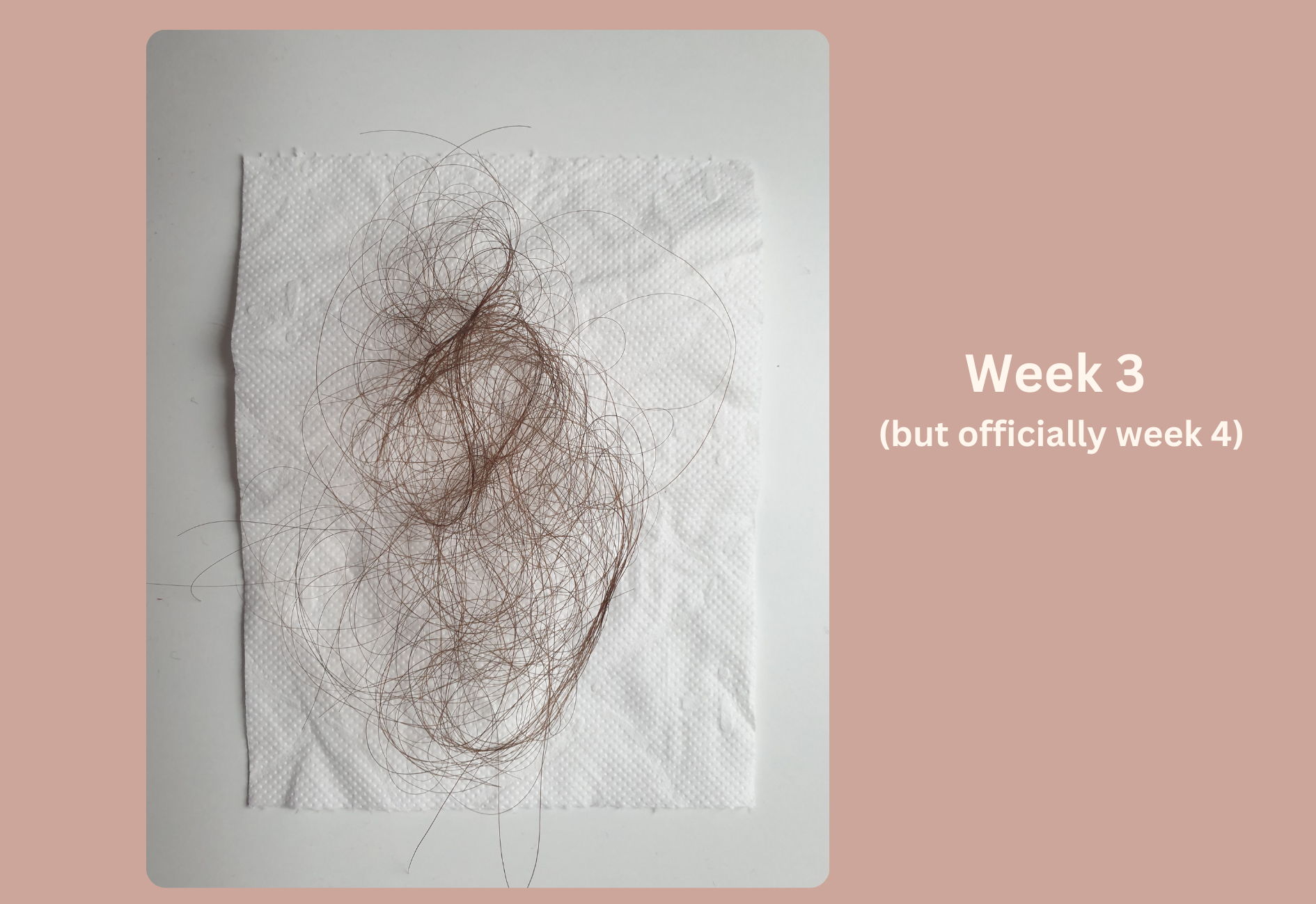
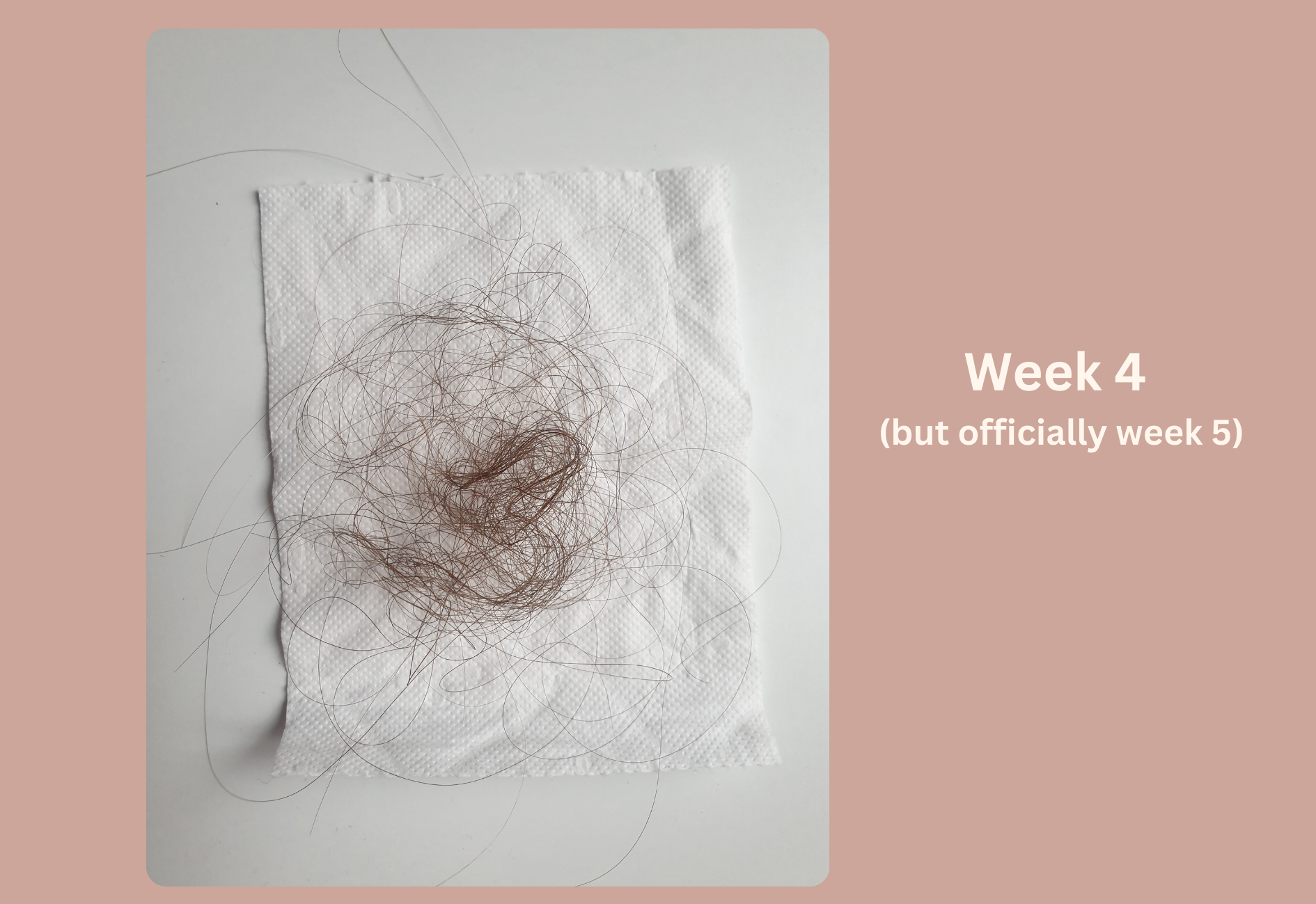
To make the results clearer and more visual, I decided to take weekly photos to document my hair collection. These raw, unfiltered images show exactly how much hair I lost each week, illustrating the seasonal hair shedding cycle. I tracked my hair loss for 5 weeks, but since the shedding had started a week before I began taking photos, I ended up tracking my seasonal hair loss for a total of 6 weeks, with 5 weeks of recorded data.
To give you a clear idea, I took simple, unfiltered, and unedited photos of the hair I collected each week. I placed them on a sheet of toilet paper for a visual reference. In the first photo, the hair was still slightly damp as it had just started drying, which might make it look more compact. However, in the following weeks, the hair was completely dry, making it easier to compare. Despite this small difference at the start, you can clearly see how the hair loss evolved over the weeks.
The results speak for themselves: by simply letting the process unfold naturally, with a little daily vitamin D support, I observed the expected rise and fall of hair shedding. No miracle treatments, no drastic changes, just an experiment to better understand how seasonal hair loss works and how to experience it with more peace of mind.
My Hair Loss Report in Pictures
For several years, I hadn’t really experienced seasonal hair loss. In fact, I realized that this phenomenon tends to come back for me every two or three years. It’s a bit strange, but it doesn’t happen every year. And yet, this time, it’s definitely here!
At the start of the first week, I didn’t take a photo right away because the hair loss was pretty unexpected. However, the amount of hair I was shedding seemed really excessive, so I thought it could be related to seasonal hair loss. I promised myself that I’d start taking photos if it continued the following week. And sure enough, by the end of that first week, I noticed a significant amount of hair loss every time I washed my hair , way more than usual.
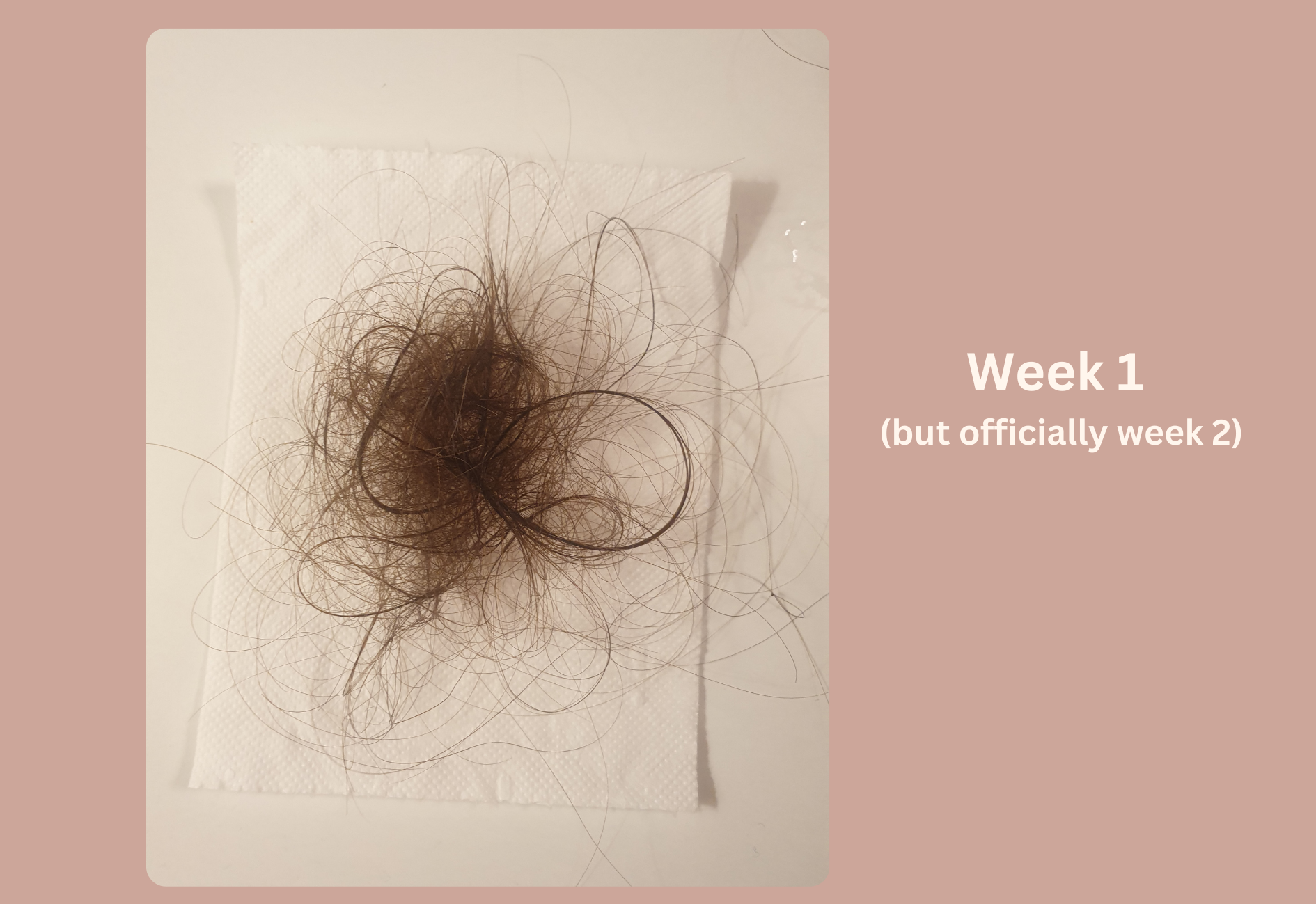
To give you an idea, the hair loss in the first week was roughly equivalent to what you see in my first photo. So, even though I didn’t take a photo at the very beginning, you can say that the first photo already represents two full weeks of shedding. At this point, I was also noticing more and more hair on my pillow every morning. But what really struck me was in the shower: after rinsing my hair, a large clump would fall into my hands, and I have to admit, it was a bit alarming.
Luckily, by the end of the third week, I noticed a significant improvement. The second photo I took shows a drastic reduction in hair loss. It was such a relief to see the situation improving.
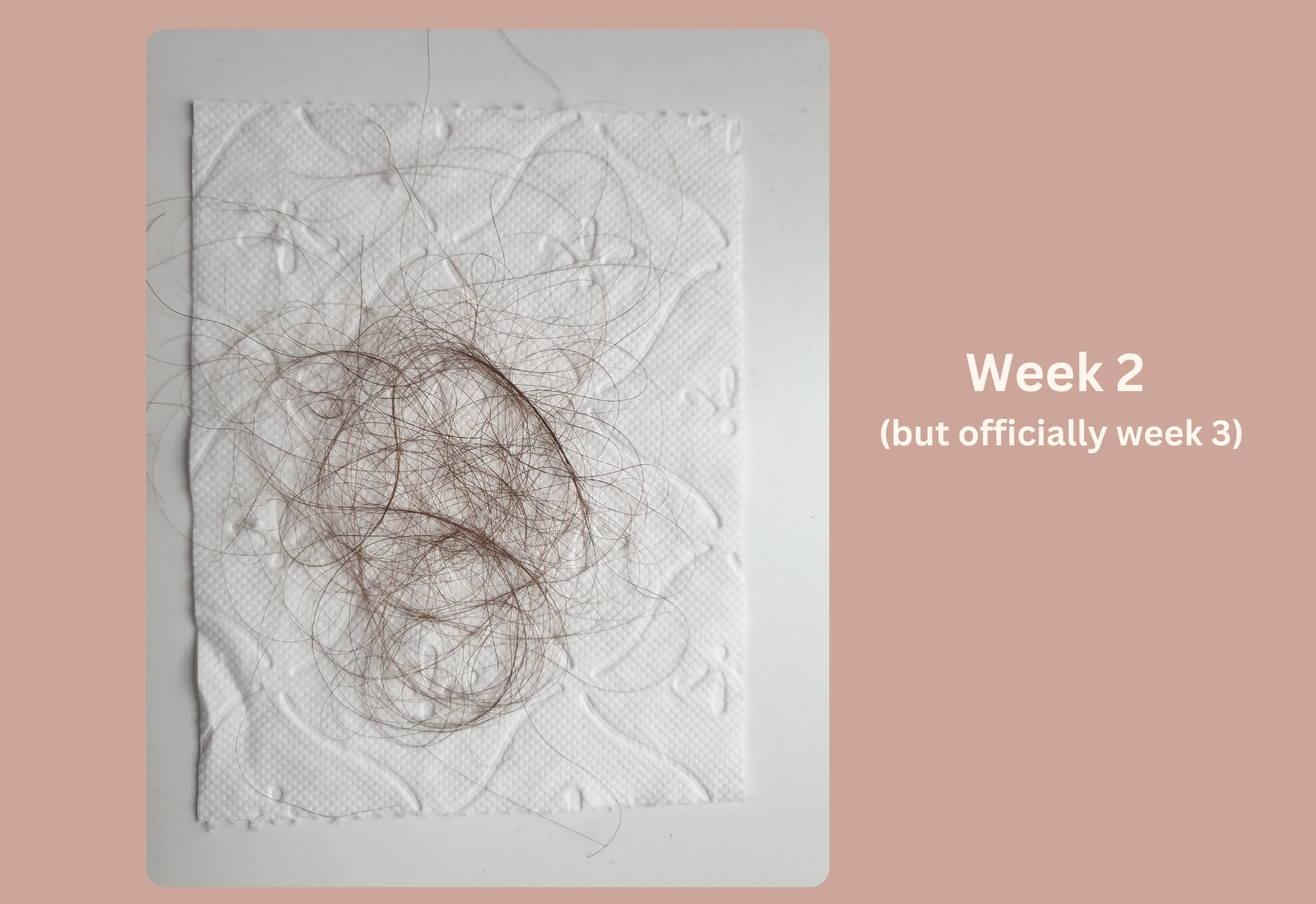
In the following three photos, taken in the subsequent weeks, you can clearly see that the shedding has stabilized and returned to normal. These final photos show the usual amount of hair loss for me, neither more nor less.

What really surprised me about this experience was how quickly the hair loss stopped this year. Usually, seasonal hair loss lasts much longer, so I was pleasantly surprised to see that this time, it ended much faster. I truly believe the difference comes from my daily vitamin D supplementation, which I hadn’t been doing in previous years. I’ve been taking vitamin D every day for a while now, and it’s the only thing that’s changed in my routine.
As someone who’s deficient in vitamin D (which is the case for 90% of the population), I highly recommend checking if you’re getting enough. I speak from experience: after being severely deficient, supplementation has made a real difference, not just for my fatigue and sleep, but also for the amount of hair lost.
In summary, this experience really reassured me that seasonal hair loss can often resolve on its own. But it also reminded me of the importance of maintaining adequate vitamin D levels to help keep hair healthy.
Through this experience, I’ve learned that seasonal hair loss is a natural process, but it can vary from year to year. Even though it can be a bit concerning to lose more hair than usual, especially when it seems excessive, it’s important to stay calm and let your body go through its cycles. For instance, this year, my hair loss only lasted three weeks, and I genuinely believe it’s because of the vitamin D I’ve been taking daily. This experience also showed me how important it is to stick to a regular hair care routine and not panic when the seasons change.
If you’re also dealing with seasonal hair loss, know that it’s usually temporary. Just take care of your overall health, keep an eye on your vitamin D levels, and track the progress.
Have you noticed seasonal hair loss this year? How do you manage it? Feel free to share your experiences in the comments!
See you soon, Beautifully Moi!
 Beautifully Moi
[…] English version here […]
LikeLike
[…] I had already talked about my seasonal hair loss in another article, and that’s when I started taking vitamin D regularly. It really helped me manage the shedding and feel more at ease. Here, I’m showing you a concrete example (photo) of my hair collected after the shower since I’ve been taking vitamin D. But if you’d like to see my full journey, starting with heavy shedding and then week by week progress, you can check out my article: “My Seasonal Hair Loss in 5 Weeks: I’ll Show You! […]
LikeLike