


- What Is a Dermatofibroma?
- Diagnosis & Seeing a Dermatologist
- Treatment & How It Evolves
- Prevention & Practical Tips
In December 2024, I noticed a small pimple on my leg. That was pretty unusual for me, especially in that spot, especially after my Roaccutane treatment, so it caught my attention. Then, I forgot about it… until March 2025, when I realized it was still there. But this time, it had hardened.
That seemed odd, so I booked an appointment with a dermatologist (after struggling to find one available). The verdict? A dermatofibroma. Nothing serious, just an overproduction of collagen during the healing process.
I’m sharing my experience in this article for informational purposes, to raise awareness about this type of skin lesion, which can be surprising. Even though it’s usually harmless, it’s always best to see a dermatologist if a bump sticks around (appears, changes or else) for too long. So, let’s talk about what a dermatofibroma is, why it forms, and why consulting a doctor is important when a skin lesion doesn’t go away.
What Is a Dermatofibroma?
A dermatofibroma is a benign skin tumor made up of collagen and fibroblast cells. It typically forms as a result of excessive healing after a minor skin injury, like a bug bite or small trauma. The skin’s abnormal response leads to an overproduction of collagen, creating a firm little lump under the surface.
Risk factors for developing a dermatofibroma include:
- Scarring tendencies: People whose skin heals poorly or slowly are more prone to this type of benign growth.
- Keloid-prone skin: If you’ve had keloid or hypertrophic scars before (like me), you might be more likely to develop one.
- Minor traumas or bug bites: Repeated small injuries or insect bites can trigger this kind of skin reaction.
How Does a Dermatofibroma Look?
A dermatofibroma is usually a small, firm lump under the skin, measuring a few millimeters to about 1 cm in diameter. It can appear brownish, reddish or pinkish, or flesh-colored. It feels firm to the touch and sometimes moves slightly under the skin. Most of the time, it’s painless, though it can be a little sensitive.
Diagnosis & Seeing a Dermatologist
If you have a bump or skin lesion that doesn’t go away, changes in appearance, or becomes painful, seeing a dermatologist is essential (which I did right away).
Even if it turns out to be harmless, it’s always better to have it checked!
In my case, what started as a simple pimple on my leg turned into a small, hard, pinkish/flesh-colored lump. It didn’t hurt, but it was slightly sensitive to touch.
During my appointment, the dermatologist had me lie down on the exam table. She used a diagnostic lamp with a magnifier to get a close look at the lesion. Then, she performed the pinch test, when she pinched the skin, the dermatofibroma slightly sank inward, confirming it was benign. This simple test helps differentiate it from other types of skin lesions.
The diagnosis was made quickly: it was a dermatofibroma. The doctor reassured me that it wasn’t dangerous, just my skin reacting to a previous pimple or insect bite, as mentioned earlier.
Here’s what my dermatofibroma looks like!
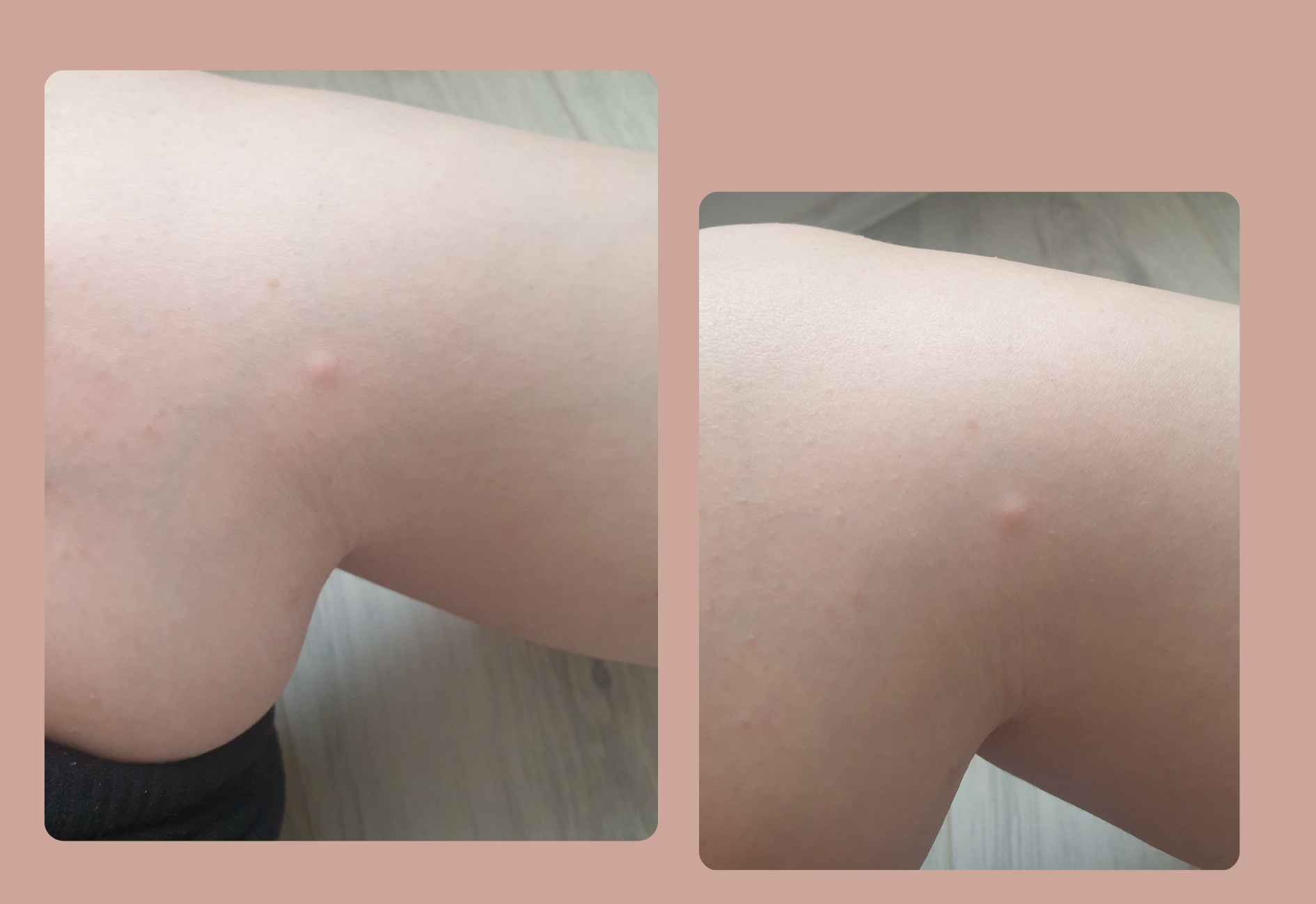
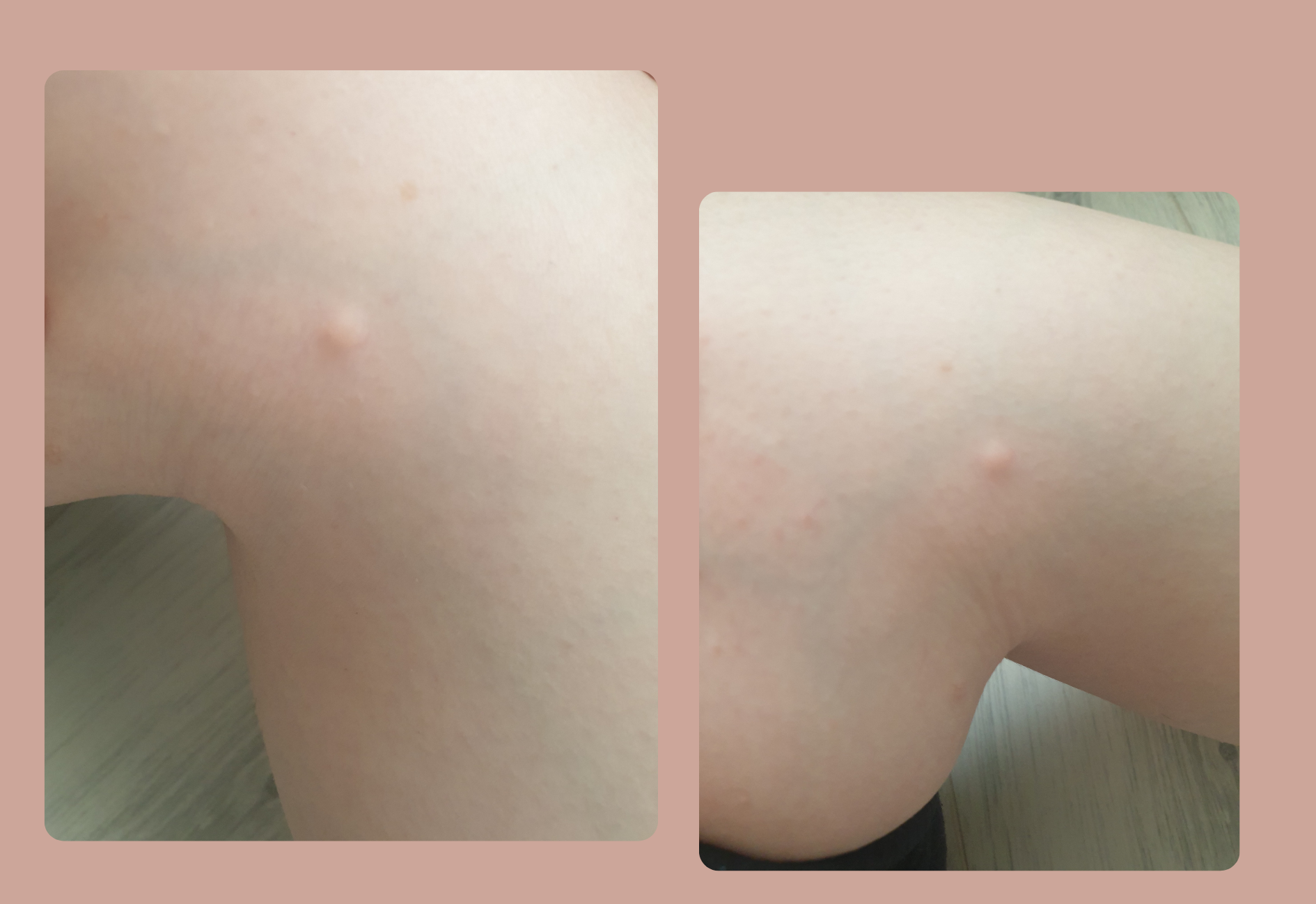
Since it’s on the side of my leg, it doesn’t really bother me day-to-day. But when I look at it, it does seem a bit noticeable… So I’m wondering: is it really worth removing? Because if it’s just going to leave an even more visible scar, I’m not sure that’s any better. For now, it’s fine, but if it starts to bother me aesthetically, I might consider getting it removed. In the end, it’s purely cosmetic, so it’ll depend on how I feel about it over time.
Seeing a dermatologist should never be underestimated. If you have a persistent lesion or notice changes, it’s always safer to get a professional opinion. Better to check once for nothing than miss something important!
Treatment & How It Evolves
Dermatofibromas are not dangerous and can stay in place without causing health issues. However, if they become bothersome, whether for cosmetic reasons or slight discomfort, there are treatment options.
Here are the main ways to remove or reduce the appearance of a dermatofibroma:
- Surgical removal: The lump can be removed under local anesthesia, but this will leave a scar.
- Cryotherapy (freezing): Liquid nitrogen can be used to freeze and destroy the lesion, but it may also leave a scar.
- Laser treatment: This doesn’t remove the dermatofibroma but can lighten its color to make it less noticeable.
Important note: A dermatofibroma won’t go away on its own, though it usually doesn’t grow or change much either. If you want it removed for aesthetic or comfort reasons, you’ll need treatment.
My dermatologist explained that while I could have mine removed, it would leave a scar. She also prescribed an antibiotic cream with fusidic acid (which fights bacteria) and a cortisone-based anti-inflammatory agent(betamethasone valerate). This cream won’t make the dermatofibroma disappear, but it may reduce its sensitivity and slightly improve its appearance.
Since I seem to be prone to developing dermatofibromas, she also recommended that I apply this cream as soon as I notice a new bump (like a bug bite or small pimple) to prevent another one from forming.
So while these lesions can be managed, once they appear, they don’t go away without treatment.
Prevention & Practical Tips
There’s no guaranteed way to prevent a dermatofibroma, but you can reduce your risk with these simple habits:
✔ Avoid scratching or picking at pimples or bug bites. Damaging the skin increases the chances of excessive healing, which can lead to a dermatofibroma.
✔ Monitor small injuries. If you get a cut, scrape, or insect bite, keep an eye on how it heals. Excessive scarring, especially in sensitive areas, can trigger a dermatofibroma.
✔ See a doctor if a bump lasts longer than usual. If a pimple or small skin lesion sticks around and becomes firm, it’s worth getting it checked by a dermatologist. The sooner you consult, the better!
Bonus: Can Acne Bumps Turn Into Dermatofibromas?
Acne pimples don’t directly turn into dermatofibromas, but if a pimple is picked at or heals poorly, it can lead to excessive scarring. This abnormal healing process can result in a dermatofibroma, though it’s not a direct transformation.
While dermatofibromas are generally harmless, they can be a source of cosmetic concern or mild discomfort. There’s no foolproof way to prevent them, but small habits like avoiding skin trauma and watching how your skin heals, can help lower the risk.
If you ever notice a bump that lingers too long, don’t hesitate to see a dermatologist. Better to check once for nothing than to miss something important!
See you soon! Beautifully Moi!
 Beautifully Moi
[…] English version here […]
LikeLike