


- What is Vitamin D
- The Consequences of a Vitamin D Deficiency
- Vitamin D and Beauty: What’s the Connection?
- How to Boost Your Vitamin D Intake
- My Personal Experience and Tips for Choosing Vitamin D
So, the holidays are over… and with them, the long sunny days.
We notice it every year: that light makes us feel so good, both mentally and physically. And when it slowly disappears as autumn comes, we often feel a little less energetic, sometimes even really tired.
I have to say, summer (or even spring already) is truly my favorite time of the year. Just seeing the sun through my window while I’m working gives me an amazing boost, even if I don’t go outside. Those rays bring me real vitality, and I’m sure I’m not the only one who feels it 🌞.
So no, this isn’t an article directly about skincare. But I wanted to write it anyway, because taking care of yourself from the inside always shows on the outside: more vitality = more energy, a better mood, a fresher glow, and even stronger hair. And the reason I’m talking about this is because there’s an essential element that we often miss when summer ends: vitamin D.
I’m not a doctor, I’m only sharing my own experience. But every time I had a blood test, I was deficient in vitamin D. Since I started taking it as a supplement (always recommended by my doctor), I’ve really seen a difference: I feel less tired, my hair falls out much less, and I’ve got more energy back. That’s why I wanted to write this article: to raise awareness about the importance of vitamin D and encourage everyone to keep up their vitality through autumn and winter.
What is Vitamin D
Vitamin D is often called the “sunshine vitamin.” Our body produces it naturally when our skin is exposed to UV rays. That’s why we usually have more of it in spring and summer… and much less in autumn and winter, when the days are shorter and darker.
But beyond this little nickname, it plays an essential role in our body:
- It helps absorb calcium, which strengthens bones and teeth.
- It supports our immune system, which is pretty useful with cold season coming.
- It also has an impact on energy and mood (many people feel the well-known “winter blues” because of the lack of sunlight).
Even if it doesn’t act directly on the skin like a serum or a cream, we can’t deny its indirect effects: when you feel stronger, with more energy and less fatigue, it immediately shows on the outside. Your complexion looks brighter, you look less tired, and even your hair can benefit by being stronger and less prone to falling out.
The Consequences of a Vitamin D Deficiency
The problem is that most of us don’t get enough vitamin D, especially when summer is over. For me, every single blood test showed the same result: vitamin D deficiency. And honestly, I could always feel the difference in my body when I didn’t have enough.
A lack of vitamin D can show up in different ways:
- Persistent fatigue: even after a good night’s sleep, you feel heavy and low on energy.
- Low mood: the classic autumn or winter blues aren’t just psychological, they can also be linked to low vitamin D.
- Weaker hair: seasonal shedding can get worse with deficiency (I clearly noticed this before I started supplementing).
- A weaker immune system: more colds, little infections, or lingering fatigue.
What’s important to know is that even if these symptoms sound “general,” a lot of people discover that many of their issues are actually linked to low vitamin D. And most of the time, you only find out after a blood test.
Vitamin D and Beauty: What’s the Connection?
You might be wondering: “Okay, but what does this have to do with beauty and skincare?” And you’re right, vitamin D isn’t something you put on your skin like hyaluronic acid or vitamin C. But its indirect role is super important.
Because when you feel good, when your body works well and your energy is up, it always shows on the outside:
- Your complexion looks brighter, less dull.
- Dark circles and signs of fatigue are less visible.
- Your hair can get stronger, with less shedding.
- And most of all, you feel an overall well-being that shines through your face.
In short, taking care of your vitamin D isn’t only about protecting your immune system or bones, it’s also a way to boost that natural glow we often link with a healthy look.
I really believe that outer beauty and inner well-being are connected. And vitamin D, even if we don’t always think about it, is a perfect example of that.
How to Boost Your Vitamin D Intake
Now that you know how important vitamin D is, you’re probably asking yourself: “How can I make sure I get enough, especially when the days get shorter?” Don’t worry, there are simple and effective ways:
Enjoy the sun
Even in autumn or winter, just a few minutes of sun exposure every day is enough. You don’t need hours of tanning: 10–15 minutes on your face, arms, or hands can already help your body produce vitamin D. And if you work indoors, open your windows and let the sunlight in — it already makes a small difference!
Eat the right foods
Some foods are naturally rich in vitamin D:
- Fatty fish like salmon, sardines, or mackerel
- Eggs (especially the yolk)
- Fortified foods (milk, cereals, some plant-based drinks)
This helps, but usually it’s not enough on its own, especially in autumn/winter.
Supplements
For people who are really deficient in vitamin D (like me, according to my blood tests), supplements can be a simple and effective solution. It’s important to do it under medical supervision, since everyone’s needs are different.
Since I started, I’ve really felt the difference: more energy, less fatigue, and overall better vitality.
Listen to your body
Pay attention to the signs: persistent fatigue, more hair loss than usual, lower mood… These are often signals that a vitamin D boost could help.
My Personal Experience and Tips for Choosing Vitamin D
I wanted to share my personal experience, because many people don’t realize how much vitamin D can influence our energy and vitality.

Personally, I take vitamin D3 together with vitamin K2, and I particularly recommend the brand TheraScience (based on my own experience), especially for these ingredients, which we’ll discuss later, and for its effectiveness. This vitamin was recommended to me by my sister, who had received the suggestion from her doctor.
At first, I tried weekly liquid drops, without really noticing any difference. I then tried strawberry-flavored vitamin D gummies, but the real improvement, I truly felt, came when I started taking the daily TheraScience vitamin D3 and K2 supplements. Since then, my energy and vitality have significantly increased, and I feel much better on a daily basis.
Here are some key points to help you choose a good supplement:
Do a blood test first
Even though vitamin D deficiency is very common, don’t start supplementing on your own. A blood test will show if you really need it and how much.
Choose natural ingredients
Check if the active ingredients come from plant, animal, or marine sources.
The more natural and pure the product, the better your body absorbs it and the fewer chemical additives you get.
Pick a fat-soluble form
Vitamin D is better absorbed when taken with fats. That’s why I take a supplement that already contains oil (in my case, organic olive oil), and always with a meal that has some healthy fats, like avocado or nuts.
Avoid certain formats
Gummies or chewable tablets often contain a lot of sugar, which can be counterproductive in the long run.
For example, here are the ingredients of my own supplement Therascience:
- Fish gelatin (capsule)
- Natural vitamin K2
- Humectant: glycerol
- Purified water
- Natural vitamin D3
- Natural coloring: riboflavin
Why Daily Vitamin D3 Worked Better for Me
In my case, I really noticed a difference once I started taking vitamin D on a daily basis. I had a significant deficiency, and at first, I was prescribed weekly ampoules. However, I didn’t feel much improvement with that approach.
I only started to notice real benefits once I switched to taking vitamin D on a daily basis. Now, I take it every day, and it genuinely makes a difference to how I feel. At the moment, my routine is vitamin D3 2000 IU combined with vitamin K2 75 µg.
This is what works for me personally, but everyone’s needs are different, so it’s always best to check with a healthcare professional before starting any supplementation.
And that is all!
The goal is really to prioritize quality and natural sources, so you know exactly what you’re putting in your body and you optimize absorption!
What I’ve noticed since taking it:
- Less fatigue in the morning, I feel more energetic right after waking up.
- Stronger hair, with MUCH LESS shedding than before. (I’ll share a photo after brushing, so you can see the amount of hair that comes out.)
- Better sleep (I used to have some sleep issues for different reasons, and combined with magnesium (article coming soon if you’re interested!), I now sleep more deeply and recover better.
Vitamin D and My Seasonal Hair Loss: My Experience
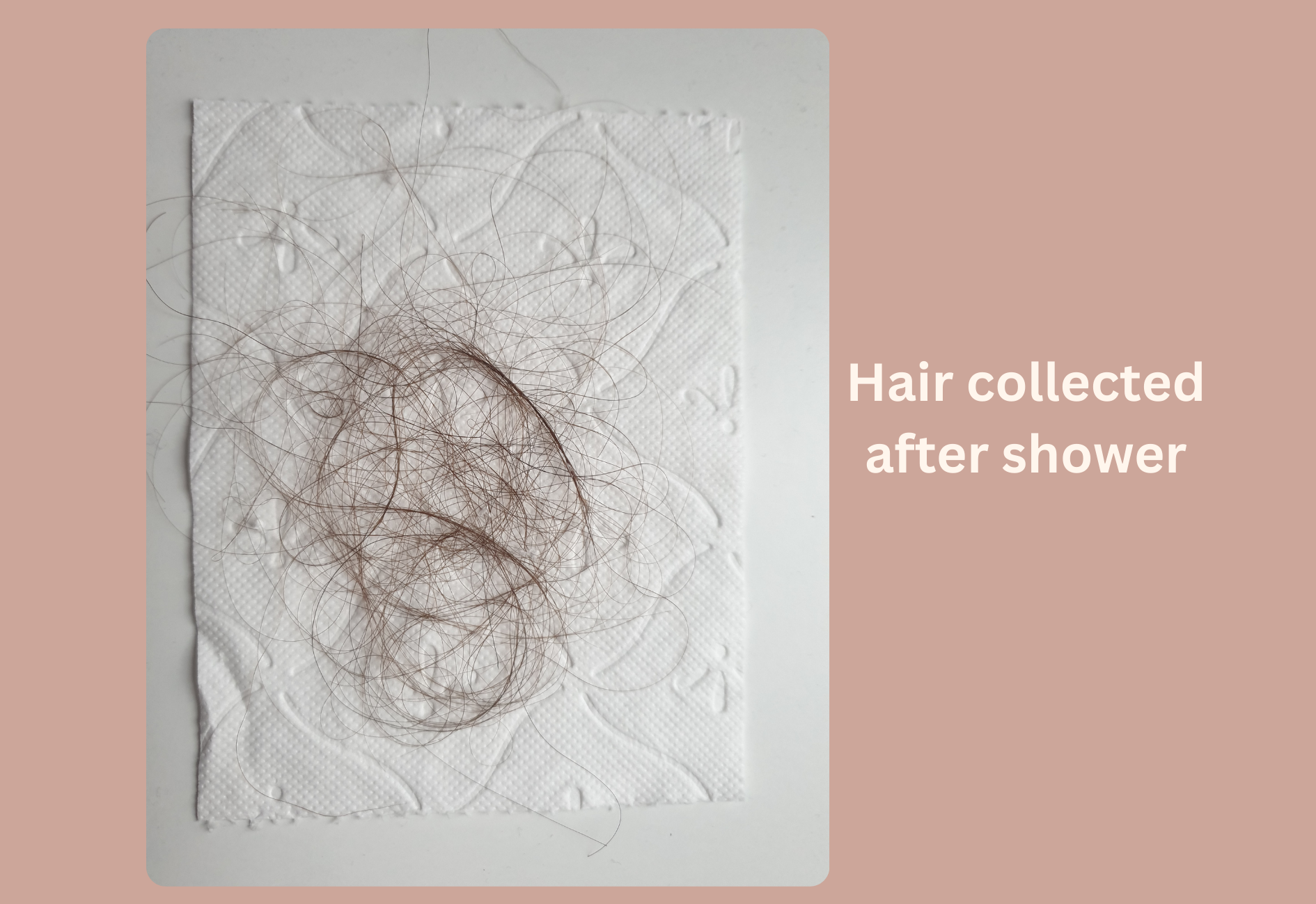
I had already talked about my seasonal hair loss in another article, and that’s when I started taking vitamin D regularly. It really helped me manage the shedding and feel more at ease. Here, I’m showing you a concrete example (photo) of my hair collected after the shower since I’ve been taking vitamin D. But if you’d like to see my full journey, starting with heavy shedding and then week by week progress, you can check out my article: “My Seasonal Hair Loss in 5 Weeks: I’ll Show You!
In short, taking care of your vitamin D is really a small step that can have a big impact on your energy, sleep, and well-being and indirectly, on your skin and overall vitality.
That’s why I wanted to share my experience with vitamin D. Even if it’s not something you apply to your skin, its effects on energy, mood, sleep, and general vitality definitely show on the outside: a brighter complexion, stronger hair, and that feeling of well-being you can see and feel every day.
Of course, I’m not a doctor, and it’s important to always get a blood test before starting supplementation. Even if vitamin D is one of the most common deficiencies, everyone has different needs, and taking it without checking can be counterproductive.
My main advice if you want to try: go for quality and natural ingredients, check the source (plant, animal, or marine), take it with a meal that contains healthy fats, and avoid overly sugary formats like some gummies. These little details really make a difference in absorption and results.
With the end of summer and shorter days coming back, I think it’s really important to keep up this essential vitamin for our body, and I definitely recommend taking it if you’re deficient. For me, it’s the one supplement I feel I need all year round, and I’ve only seen benefits.
If you have any questions about my routine or vitamin D, feel free to comment below (or send me an email) and I’ll be happy to answer. And what about you? Have you noticed the effect of the sun (or the lack of it) on your energy or your skin? Share your experience in the comments, it could really help other readers!
See you soon, Beautifully Moi!
 Beautifully Moi
[…] English version here […]
LikeLike
[…] If you’re interested, I also wrote a full article about vitamin D, where I share all the benefits I noticed: not just for my hair, but also for my energy, skin, and overall well-being. You can read the article here! […]
LikeLike