
- 1 Month After Accutane: First Check-up and Post-Treatment Routine
- 3 Months After Accutane: Hair Scare
- Assessment at 1 Year and a Half after Accutane: A Retrospective Look
After two decades of battling acne, I finally decided to tackle it head-on at the age of 35 and embark on the Isotretinoin* treatment, despite my initial fears. The nine months of treatment were a real rollercoaster, marked by ups and downs. The persistent fatigue and muscle pains were sometimes unbearable, but the idea of seeing my skin transformed kept me motivated. (See article about my experience with Isotretinoin here)
*Known better as and treatment sold under accutane
As I approached the end of the treatment, the results began to manifest themselves spectacularly. By the sixth month, I started to notice a significant improvement in the condition of my skin: pimples became increasingly rare, blackheads disappeared, and even my rosacea seemed to fade. I was amazed to discover smoother and more radiant skin than ever before, a sensation I had never experienced before.
However, despite these impressive results, a concern remained: what would happen after stopping the treatment? My dermatologist had warned me that pimples could reappear and advised me to keep good skincare habits to prolong the benefits of Isotretinoin.
As the weeks passed after the end of the treatment, I found myself confronted with some uncertainty. Each new pimple or imperfection seemed to question the results of this treatment.
The experience with this medication is unique to each individual, and over time, I have learned to take a step back and accept that every skin reacts differently. But this is also what prompted me to share my story with you. To give you as much detail as possible to help you face this treatment, alleviate your doubts and fears, and provide answers to your questions.
Today, after a year and a half since the end of the treatment, I continue to carefully observe the evolution of my skin, but I am still grateful for the positive change that Isotretinoin has brought to my skin.
1 Month After Accutane: First Check-up and Post-Treatment Routine

Once the treatment is completed, a follow-up appointment is scheduled one month later. This appointment typically includes a blood test, a general examination, and an assessment of the skin condition by the dermatologist.
While waiting for this appointment, my dermatologist had prescribed me (during my 9th month appointment under Isotretinoin treatment) an anti-acne cream, Skinoren, based on azelaic acid to be applied twice a day once the treatment is finished. Azelaic acid, known for its antibacterial, keratolytic, anti-inflammatory, and antioxidant properties, was perfect for caring my still fragile skin after treatment. More on Azelaic acid in another article!
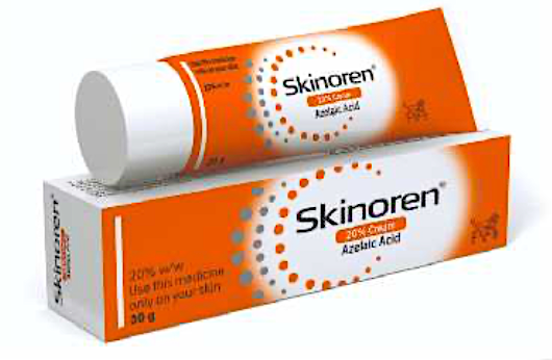
Warning: This is a medication! I do not promote this medication! It’s only informative. Please ask your doctor about this cream as it’s a medical treatment. If you are pregnant or are breastfeeding, please ask you doctor!
The check-up appointment arrived one month later, and the results were encouraging: the blood test was good, my overall condition was excellent, and the dermatologist confirmed that the medication had left my body. She also assured me that there was no longer a risk of malformation for a potential future child, which was good news. It is imperative to wait for your doctor to confirm this, as the elimination time of the medication from the body may vary for each individual (depending on the dosage or other factors)!
Regarding the side effects and the condition of my skin post-treatment, there were a few things to discuss.
Post-Treatment Side Effects: Skin and Hair Still in Transition
One month after the end of the treatment, some side effects persisted, while others seemed to have disappeared.
My skin, lips, and hair were still as dry as before, but there was noticeable improvement in my eyes, which were no longer dry. The texture of my hair had also changed, becoming drier and prone to frizz, likely due to dehydration caused by the medication. Finding the right products to restore moisture to my hair became my new quest.
However, the muscle aches and fatigue, which had been particularly bothersome at the end of the treatment, seemed to have completely disappeared. Just one month after stopping the treatment, I no longer felt any muscle aches or fatigue. I was relieved that these effects had completely disappeared in such a short time.
My Skin at 1 Month Post-Treatment: Change in Local Treatment
One month after the end of the treatment, my skin remained dry, and my skincare routine still focused on hydration. Using gentle and moisturizing products, my skincare routine was the same as during Isotretinoin treatment but with the addition of Skinoren, an anti-acne cream recommended by my dermatologist.
During this interim month before my follow-up appointment, I began using Skinoren every day, morning and evening. Fortunately, my skin tolerated Skinoren well, without increasing its sensitivity.
About two weeks after stopping Isotretinoin, despite using the anti-acne treatment, I noticed the appearance of some blackheads on my nose. Although their number was limited, it indicated that Isotretinoin was beginning to be eliminated from my body and that my skin was resuming its sebum production, especially in the T-zone.
During my follow-up appointment, my dermatologist noted the return of these few blackheads and prescribed Effederm, a cream containing 0,05% tretinoin to be applied locally once a day, in the evening, followed by sunscreen in the morning.
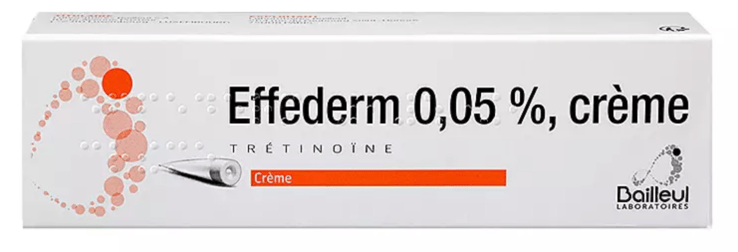
Warning: This is a medication! I do not promote this medication! It’s only informative. Please ask your doctor about this cream as it’s a medical treatment. Can not be used if you are pregnant or breastfeeding, ask your doctor! (Update: This medication is now out of stock)
Curious to dive deeper into retinoids?
Get my 32-page beginner-friendly retinoid guide for free when you subscribe [here], or grab it anytime on Gumroad for just €4.90 [here]!
Tretinoin is a potent retinoic acid that can be irritating to the skin. Available only by prescription, it is more effective and more irritating than retinol and/or retinal. More details on the different forms of retinoids, derivatives of vitamin A, will be discussed in a future article!
She recommended using Skinoren in the morning and Effederm in the evening (on dry face) if my skin tolerated it, otherwise, to use only Effederm in the evening.
3 Months After Accutane: Hair Scare

Three months after the end of the treatment, there are no more scheduled follow-up appointments with the dermatologist. Indeed, the treatment is considered complete after the check-up conducted one month after stopping Isotretinoin.
During this third month, a notable side effect occurred, which I want to share before continuing my testimony at 1 year and a half post-treatment.
At this stage, I faced a side effect often discussed on forums and blogs: the infamous post-treatment hair loss. While I did not experience this issue during the treatment (which is one of the side effects), I noticed hair loss about two months after my last visit to the dermatologist, which was 3 months after the end of the treatment. This hair loss lasted for about a month.
To give you an idea, the amount of hair lost was about twice the normal amount. With each shower or brush, I observed this significant increase in hair loss. Although, in my case, I cannot definitively attribute this loss directly to Isotretinoin, as it is common after any drug treatment or traumatic event, such as significant stress or hormonal changes, for the body to react with increased hair loss.
This phenomenon, called telogen effluvium, corresponds to a temporary disruption of the hair cycle, resulting in abundant and widespread hair loss. In my case, this loss was temporary and resolved on its own without specific treatment, although I was taking vitamin D daily, which may have helped regulate hair loss. If you experience prolonged hair loss, it is recommended to consult a dermatologist specializing in hair problems.
Post-Treatment Side Effects: Evolution of Skin, Lips, and Hair
At this stage, I began to notice changes in my skin and lips. My skin had become less dry than during the treatment, although still drier than before starting the treatment. In the morning, I noticed a slight shine on my nose and forehead, but it disappeared once I washed my face with water, without reappearing throughout the day. As for my lips, they were no longer dry at all and had returned to their normal state.
However, the challenge persisted with my hair and adapting to its new texture. It is worth noting that before the Isotretinoin treatment, my hair was smooth with a tendency to be greasy, and I had to wash it every two days. During the treatment, from the fifth month onwards, I could leave them unwashed for at least two weeks or more. Now, three months after the end of the treatment, my hair becomes greasy after just one week.
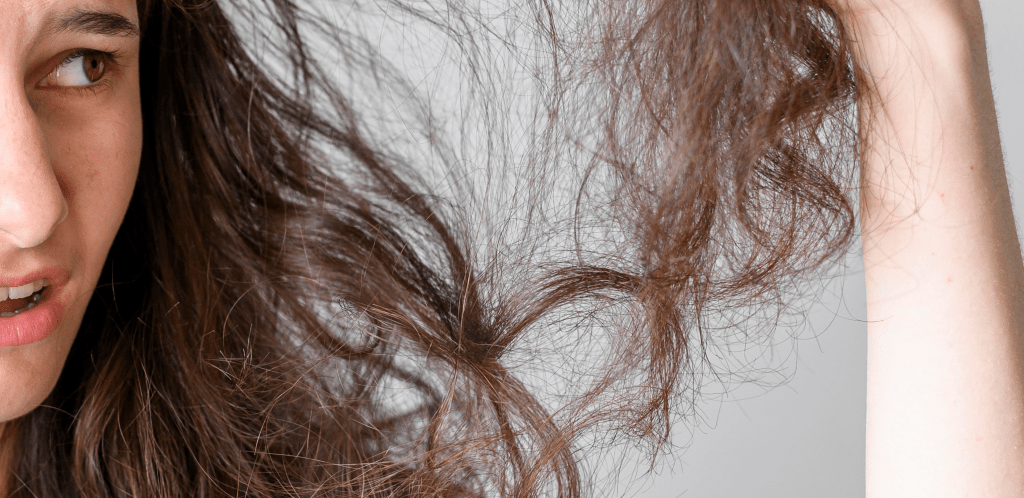
But the biggest challenge lies in the texture of my hair. Once thick, smooth, and silky, my hair is now porous, prone to frizz, and slightly wavy. After washing them, my hair swells and frizzes, requiring me to flatten them during drying. I often try to let them air dry, flattening them with clips once brushed, a step I never did before.
I wonder if these changes are due to hormonal fluctuations or other factors, but I have read online testimonials from people who have had a similar experience to mine. You can check out here for more information.
My Skin Condition at 3 Months Post-Treatment: New Concern
Three months after the end of the treatment, my skin remained dry but with a slight greasy feeling on the nose and forehead upon waking up. Regarding blackheads, I had noticed gradual improvement. The blackheads I had observed as early as the first month post-treatment were starting to diminish thanks to the use of tretinoin. After two months of treatment, I could already see some blackheads disappearing, which gave me confidence in their total long-term disappearance, or at least significant reduction.
However, acne seemed to reappear in the form of sporadic small bumps. One on the forehead, one around the mouth (which was new for me, as I didn’t have pimples in that area before the treatment), one on the cheek, one on the neck, and so on. What was strange or at least unusual was that these small bumps disappeared quickly, either by the end of the day or by the next day, without leaving any scars. Although their number was limited, each new bump was a reminder of the constant challenge of acne.
Despite these minor inconveniences, my skin retained its beautiful and clear texture, without acne scars or rosacea. However, the appearance of these new bumps made me wonder: was this the beginning of a relapse…?
Assessment at 1 Year and a Half after Accutane: A Retrospective Look

After a year and a half since the end of the treatment, it’s time to assess the results of isotretinoin, the success of which leaves me perplexed today.
Persistent Side Effects: Continued Dry Skin and Hair
Despite the passage of time, my skin and hair problems remain unchanged, retaining the same dryness as at 3 months post-treatment. I’m beginning to realize that this condition could be permanent, as it’s the very mechanism of the medication to atrophy the sebaceous glands to reduce sebum production.
The texture of my hair remains a constant concern, and I continue to seek solutions. I recently tried the “Sayoss Repair” conditioner, which seems to yield satisfactory results by making my hair softer to the touch. Although I still need to flatten them during drying, I notice a reduction in frizz and an improvement in their softness. For now, I’m quite pleased with this product. But if you have any advice, feel free to share it in the comments!
However, when it comes to my skin…
Evolution of My Skin at 1 Year and a Half Post-Treatment: A Relapse?
Today, one year and a half after the end of the treatment, I continue to use tretinoin, a cream that my skin has fully tolerated, although I sometimes need to take breaks after four days of continuous application and focus on hydration. I see that tretinoin effectively tackles my blackheads and improves the overall condition of my skin.
Despite this, I still notice the emergence of small pimples that quickly disappear, scattered across my entire face and neck. However, about a month and a half ago, on New Year’s Day, I was faced with the appearance of large cystic pimples on my neck (see below), the scars of which are still visible today. These pimples were painful and quite prominent.
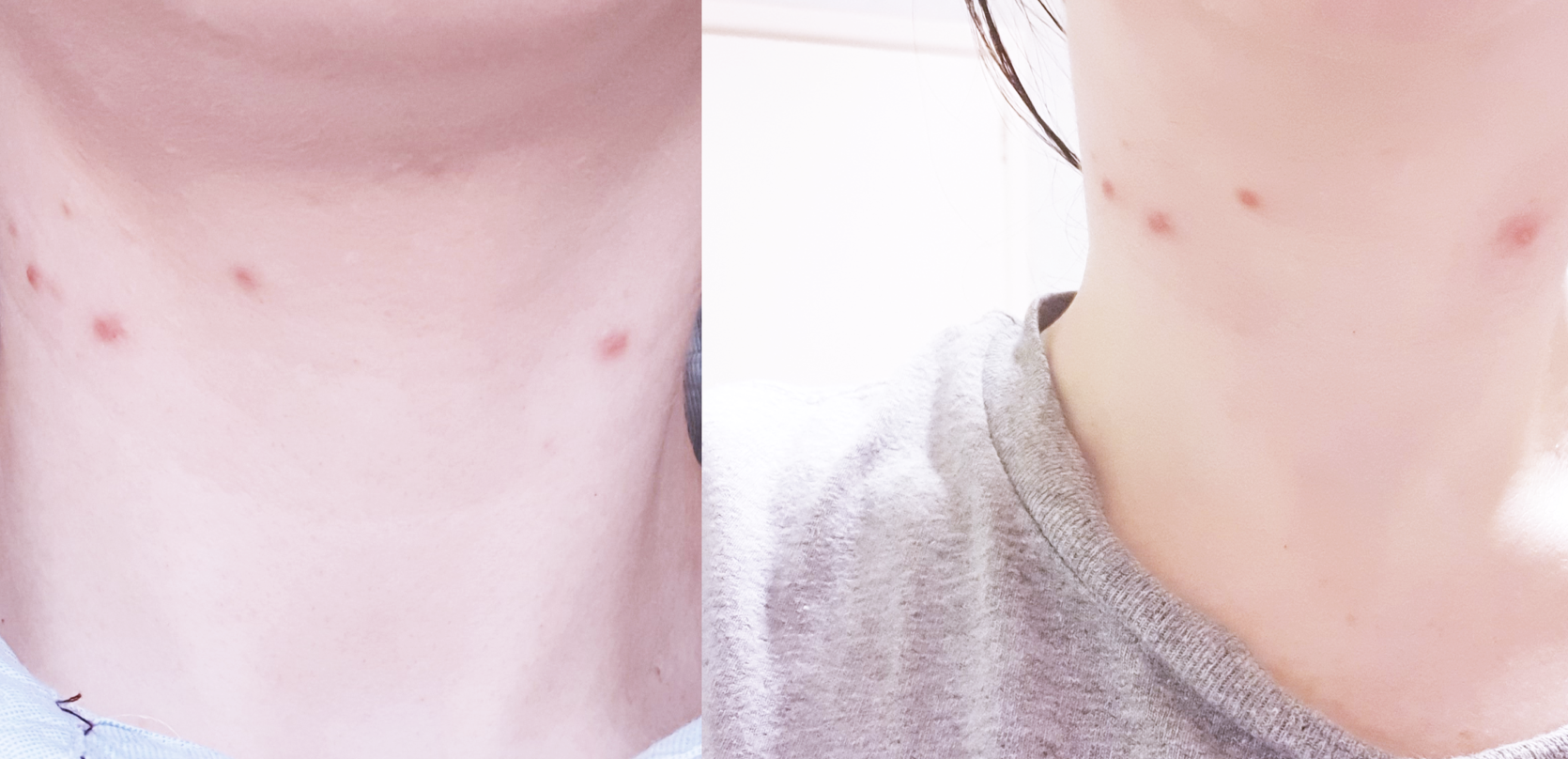
Although the occurrence of cystic acne has become rarer (this episode being the only one since the end of the treatment), I wonder if this can be considered a relapse, and I fear a new episode of cystic acne in the future. This episode was the most pronounced since the end of the treatment, which prompted me to schedule an appointment with the dermatologist for a check-up on March 4, 2024.
(Update 30/03/2024: I cancelled my appointment because I’ve been seeing good results with my new skincare routine, you can check it here)
While awaiting this appointment and following this episode, I have also adjusted my skincare routine, still focusing on hydration due to the changes that have occurred on my skin post-Isotretinoin, but also incorporating other anti-imperfection products. Update 30/03/2024: I detail this new routine in my article “My Skincare Routine After Isotretinoin: How I Care for My Skin Post-Treatment” .
In conclusion, one year and a half after completing my Isotretinoin treatment, I am faced with a mixed assessment. On one hand, I am satisfied with the significant improvement in the condition of my skin: it is clearer, with less rosacea and visibly tightened pores. On the other hand, I remain concerned about the sporadic appearance of pimples, especially cystic ones, which have recently reappeared. Despite these persistent challenges, I remain optimistic about the evolution of my skin and continue to seek solutions tailored to my new skincare routine.
My next appointment with the dermatologist will allow me to take stock and consider new strategies to maintain the health of my skin. Despite the difficulties encountered, I am grateful for the progress made and determined to continue my journey towards healthier and more balanced skin. (Update 30/03/2024: Appointment cancelled!)
I hope this article has provided you with more details about the post-treatment period. Testimonials one year after treatment are often rare, and this retrospective could thus address several questions you may have during or after your treatment.
Have you ever undergone Isotretinoin treatment? What was your experience? What do you think of the persistent side effects of Isotretinoin mentioned in the article? Are you facing similar skin problems? Share your tips and tricks in the comments!
See you soon, Beautifully Moi!
 Beautifully Moi
[…] articles “My Quest for Perfect Skin with Isotretinoin: An Intimate Journey” and “My Post-Isotretinoin Journey: Assessment at 1 Month, 3 Months, and 1 Year and a Half” to understand the condition of my skin before and after the […]
LikeLike
[…] articles: “My Quest for Perfect Skin with Isotretinoin: An Intimate Journey” or “My Post-Isotretinoin Journey: Assessment at 1 Month, 3 Months, and 1 Year and a Half“), yet acne still remains a daily challenge for […]
LikeLike
[…] Indeed, I had three big cystic acne spots appear on my neck (you can see the pictures in my article here). However, I’ve since adjusted my routine, and I’m confident to say that I […]
LikeLike
[…] English version here […]
LikeLike
[…] If you’re curious about how my Accutane treatment went, I wrote a full article about my experience here. And for those wondering about the long-term effects, I also shared my post-treatment updates at 1 month, 3 months, and 1.5 years later, here! […]
LikeLike