

- Why I Decided to Apply Tretinoin on My Neck
- How I Introduced Tretinoin Into My Neck Skincare Routine
- Early Signs of Irritation: When I Knew Something Was Wrong
- What I Learned From Using Tretinoin on My Neck
- To Sum It Up: Tretinoin on the Neck, Yes… But Carefully
After getting back into my routine with azelaic acid and tretinoin – and going through the usual purge – I wanted to share something a bit less talked about: how tretinoin affects the neck.
I already told you what happened when I restarted the treatment: small breakouts on my forehead, dry cheeks… I documented that purge to show that yes, even after years of use, purging can still happen (read here the full story). Sure, it’s more manageable (because you know your skin better with time), but it’s still real.
As for me, I never stop at the face in my skincare routine. I always extend the products down to my neck. That’s something I’ve been doing for a long time, but I always chose a gentler product for this delicate area.
On my neck, I stick to the essentials: retinoids. But not just any kind. Until now, I had only used retinol or retinal (two gentler forms of vitamin A; you can read more here if you want the details of this skincare routine and if you want to know the difference between the different retinoids, I explain it all here).
I never had any reaction with them. The 1% retinol from IKS was super gentle, I could use it daily. Same with the 2% retinal from Aromazone, my skin handled it very well!
But when I restarted my routine, I didn’t have any retinol or retinal left. So I thought, why not try the tretinoin (prescribed by my dermatologist)? I knew it was stronger, so I went in carefully.
And yet… despite all my precautions, I ended up developing what seems to be contact dermatitis on my chest.
Why I Decided to Apply Tretinoin on My Neck
Simply for its anti-aging effect.
Since my Roaccutane treatment, I haven’t had any breakouts on my neck. Before, it was one of the worst areas for me, sometimes even worse than my face. But since then, nothing (except for a small flare-up three months after stopping Roaccutane, which is common). So, I had no reason to use azelaic acid there anymore. It’s not a problem area, and because the neck is already thin and delicate, I didn’t want to overload it with unnecessary products.
If I had been using a gentler retinoid like retinol or retinal, I might have added a little azelaic acid from time to time. But with tretinoin (which is much stronger), I wanted to keep it minimal and focus on the essentials.
My goal was to stimulate collagen, improve skin texture, and prevent signs of aging, without damaging that sensitive area. I wanted to do the right thing… but my skin reminded me that even “good ideas” need balance.
How I Introduced Tretinoin Into My Neck Skincare Routine
For the face, I already explained everything in my previous post (I’ll link it here). But for the neck, I had to adapt a little.
I used 0.05% tretinoin, prescribed by my dermatologist. I started very slowly, only twice a week. And I followed the “sandwich method”: I applied a moisturizing balm first, then a thin layer of tretinoin, and then sealed it with more balm on top.
The idea was to protect the neck’s skin barrier as much as possible while letting the product work.
On the days I didn’t use tretinoin, I always applied a moisturizing balm. Always. It’s a must for me; especially on the neck, which is thinner, drier, and naturally less protected than the face.
I wanted to increase the frequency little by little, just like I did for my face… but I never even got the chance. The eczema showed up after the second week without me changing anything in my routine.

That’s when I felt my skin clearly saying: “No.”
The Moisturizer I Use for This Sensitive Area
Right now, I’m using Xémose Relipidating Anti-Irritation Cream from Uriage (the big 400 ml jar). It’s made for very dry, atopy-prone skin, and it helps protect, nourish, and soothe itching sensations.

Honestly, I prefer using rich balms like this, often designed for the body, because with all the acids and acne treatments I use, my skin gets really dry. I need something strong, and regular face creams often feel too light for me. It’s also more economical in a big jar, and I can use it on both my face and body.
That said… I’m not a huge fan of this cream. They claim it absorbs quickly, but on me, it leaves a greasy finish for quite a while. As for hydration, it does the job okay, even though I’ve used better creams before (I’m still on the hunt for THE perfect moisturizing balm that checks all my boxes). I keep using it because it’s effective, but I’ll probably write a full review about this product soon for those interested.
Early Signs of Irritation: When I Knew Something Was Wrong
It was after the second application that I noticed something, not directly on my neck, but on the upper chest area: a few red patches, kind of spread out.
To be honest, it only itched a little, so I didn’t think much of it and kept applying the tretinoin.
But after the fourth application (end of the second week), my entire chest was red and itchy. It became impossible to ignore…my skin was clearly reacting badly!
I stopped the treatment right away and asked my sister (who’s a med student) for her opinion. She told me it looked a lot like contact dermatitis, probably caused by product migration or friction, worsened by the tretinoin.
From that moment on, I switched to recovery mode: I focused on intense hydration, using only a thick balm and a super gentle baby cream that I really love.
This cream is from Hema and contains zinc oxide (great for calming redness and protecting the skin), natural oils, and tocopherol (vitamin E). It’s fragrance-free and has a great rating on INCI Beauty.
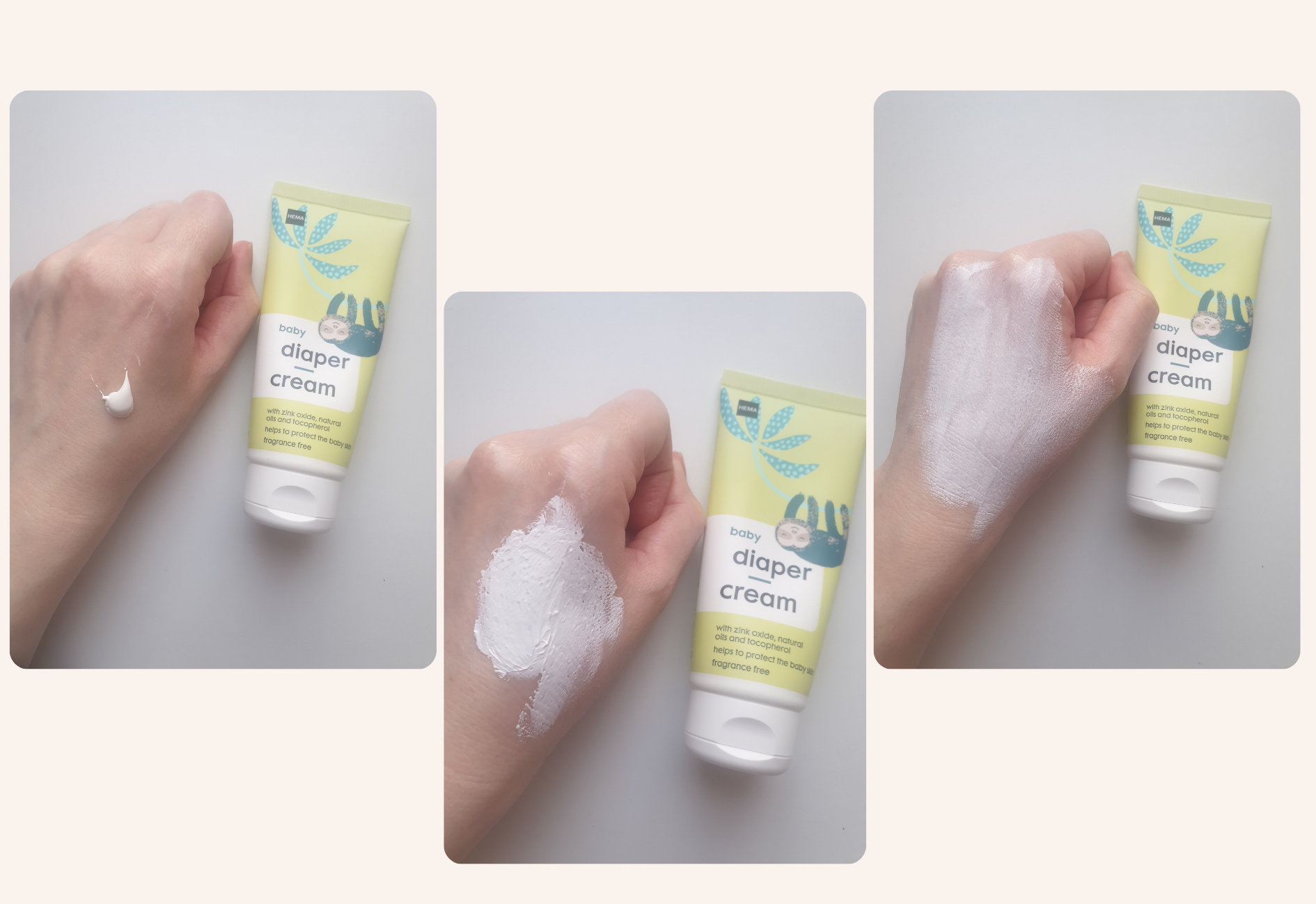
Before, I used another pharmacy cream, “Dermocrem”, that felt greasier and more occlusive. This one is a bit drier when applied and that’s its only downside but, unlike Dermocrem, the ingredients are spot on.
Post-Irritation Care: How to Choose a Good Soothing Cream
The one I use is from Hema, “baby – diaper cream”, but the brand or shop doesn’t matter: what matters is the ingredients.
To calm and repair your skin after irritation (especially from a strong active like tretinoin), you need a simple cream with no perfume, no harsh actives, and only the essentials:
• Zinc oxide → soothes skin, reduces redness, protects
• Tocopherol (vitamin E) → antioxidant, helps repair skin
• Gentle plant oils (like sunflower, sweet almond, etc.) → nourish without clogging
That’s it. No need for fancy ingredients, no fragrance, and no anti-aging actives at this stage.
You can check the ingredient list with INCI Beauty or Yuka (or another app), and most importantly: trust how your skin feels. A good recovery cream should feel soothing and comfortable, not stingy or sticky.
If in doubt, stop everything and go back to basics!
What I Learned From Using Tretinoin on My Neck
Now I know for sure: my neck just doesn’t tolerate tretinoin.
Even when I used it slowly, with good hydration and spaced applications, my skin still said “no.” So no, I won’t try it again.
On the other hand, I’ve already used other types of retinoids on this area, retinol and retinal, and I never had any issues, even with daily use. That clearly shows they’re much gentler and better tolerated by sensitive areas like the neck.
For now, I haven’t gone back to using retinoids on my neck, not out of fear, but just because I haven’t restocked yet (hello procrastination 😅).
But I do plan to go back to the routine that worked well for me. And if you’re curious, I talk more about that in this post about using retinoids on the neck.
To Sum It Up: Tretinoin on the Neck, Yes… But Carefully
If there’s one lesson I’ve learned from this, it’s this:
Never push your skincare routine just for “results.”
The skin, especially on areas like the neck or chest, has its own needs and limits. Just because a product works on your face doesn’t mean it’ll work everywhere else.
And sometimes, doing the right thing isn’t about adding more but it’s about keeping it simple.
That’s something I always say on the blog: go slowly but steadily, listen to your skin, observe how it reacts, and adjust.
That’s what a real skincare routine is, not something rigid or universal, but something alive, that evolves with you.
So, if you want to try retinoids on your neck, I’m not here to tell you “don’t use tretinoin” but I will say: start slow, keep it simple, and don’t be afraid to stop if your skin tells you to.
That’s not losing progress, that’s skincare done right!
See you soon, Beautifully Moi!
 Beautifully Moi
[…] English version here […]
LikeLike